Sermon Seeds: On the Sabbath
Sunday, August 24, 2025
Eleventh Sunday after Pentecost| Year C
(Liturgical Color: Green)
Lectionary Citations
Jeremiah 1:4-10 and Psalm 71:1-6 • Isaiah 58:9b-14 and Psalm 103:1-8 • Hebrews 12:18-29 • Luke 13:10-17
https://lectionary.library.vanderbilt.edu/texts/?z=p&d=70&y=384
Focus Scripture: Luke 13:10-17
Focus Theme: On the Sabbath
Series: Raise Her Voice: Into the Deep (Click here for the series overview.)
Reflection
By Cheryl A. Lindsay
Do you observe the sabbath? Or do you take a sabbath? Is sabbath a concept that no longer has meaning? Or, has our culture lost its commitment to sabbath? Keeping a regular sabbath day as a weekly rhythm reflects the work schedule of God the Creator as the commandment given to Moses declares:
8 “Remember the Sabbath day and keep it holy. 9 Six days you shall labor and do all your work. 10 But the seventh day is a Sabbath to the Lord your God; you shall not do any work—you, your son or your daughter, your male or female slave, your livestock, or the alien resident in your towns. 11 For in six days the Lord made heaven and earth, the sea, and all that is in them, but rested the seventh day; therefore the Lord blessed the Sabbath day and consecrated it.
Exodus 20:8-11
It is the last of the commandments that center on how we relate to God, and the only one with the rationale that our actions mirror the Holy One’s. It also is the first commandment that transitions to our relationship to others as we are responsible not only for our own observance of the sabbath but also for those under our sphere of influence and authority. The commandment is lengthy–it takes four verses to say what we distill to the few words expressed in verse eight. Keeping the Sabbath holy means honoring God but also requires justice and compassion. Perhaps if those criticizing Jesus in the Lukan passage had a fuller interpretation of the commandment, they would have understood his actions that day as being fully in keeping with remembering and keeping it holy.
Jesus’ approach to Sabbath keeping again comes under scrutiny (cf. 6:1–11) when he heals a woman with a severe disability in the course of his teaching in a synagogue one Sabbath. The woman’s healing elicits praise of God and affirmation of Jesus’ acts but also criticism centering on the charge of unacceptable conduct on the Sabbath. In response, Jesus defends his action as consistent with his critics’ routine treatment of their animals and also as necessary response on this very day to the reality of oppression by Satan. The image of liberation from Satan’s malevolent domination, together with the divided response that liberation generates, suggests further images of God’s rule as the deeper reality on display in the scene (vv. 18–21).
John T. Carroll
The religious leader objects using words that echo the commandment given to Moses. As a legalistic objection, the case would seem to be clear. The letter of the law would agree that the healing could have waited for the Sabbath. The spirit of the law questioned if the Sabbath could wait for the healing.
This woman had suffered for eighteen years. Whether the religious leader knew the depth and breadth of her affliction is unknown. The text does not indicate a preexisting relationship or acquaintance between the two of them. Remarkably, the leader does not even temper his critique with an expression of empathy or appreciation that the woman has been released from bondage. Rather, his concern is with exerting judgement and, by extension, control over the terms of her liberation.
How many marginalized communities have been encouraged to wait for an end to their suffering because it does not suit the timetable of the comfortable? For those in power, the right time for transformative, liberative change never arrives. It’s always an unfulfilling chain of excuses for why people need to wait to be free. The oppressor and those who benefit from oppressive systems have no incentive for urgency. On the contrary, the waiting game benefits their position so they advocate for it even if it means demeaning the sabbath.
The woman, however, honors not only the healing work of Jesus in her life but also the meaning of the sabbath. Her immediate and appropriate response leads her to praise in the synagogue. Her response reveals the bad faith argument of the religious establishment leader as her healing does not detract from worship, it facilitates her participation in worship.
This woman, and her lived experience, demonstrate the reason the commandment holds such detail. How can we worship freely when our neighbors are bound? How could slave owners worship in the midst of inflicting unimaginable suffering on God’s beloved? How could they worship on plantations built on stolen land by stolen labor? Was that keeping the sabbath holy?
How can we worship any day during any time when our neighbor goes hungry, unhoused, and unjustly deported? What response is required from us to the oppressive systems of this world and the demonic hold they maintain in culture and community? How do we keep the sabbath holy?
The context of the healing in 13:10–17 is teaching. Luke’s audience perceives both. As liberation from Satan, the woman’s healing manifests God’s commonwealth (11:20–22). The synagogue plays a dual role. Under imperial systems, institutions have sociopsychic impact in maladies (Theissen, 255–56). But it also is a place for teaching and healing. The synagogue leader objects not to healing but to violating the Sabbath. Jesus challenges not the synagogue leader but the assembly: “hypocrites” (13:15). Hypocrisy is not playing an artificial role, but the failure to discern God’s work on Sabbath (Green 1997, 524). Further, the woman emerges from marginality when Jesus names her uniquely “Abraham’s daughter”—astonishingly, such a title for a woman is otherwise unknown. Jesus endorses the healing with village analogies about animal husbandry. Reference to Abraham also evokes God’s promises to bless (1:54–55) that this healing fulfills. Luke 13:17 implies that persuades critics to join in rejoicing at all his remarkable deeds.
Robert L. Brawley
The woman’s healing could not wait another moment. As soon as Jesus encounters her, they respond with deliverance. She came to worship and her condition presented a barrier that Jesus eliminated so that she would be free. The irony of the objection is that Jesus’ work, like in the first creation narrative evoked in the commandment, only includes speaking a few words to reorder the situation. It was not hard work for God. Most importantly, Creator’s rest on the seventh day does not come until the work is completed and God is satisfied.
The great Civil Rights Leader Ella Baker once said, “We who believe in freedom cannot rest until it comes.” Jesus asked, “And ought not this woman, a daughter of Abraham whom Satan bound for eighteen long years, be set free from this bondage on the Sabbath day?” Throughout the gospel narrative, healing equates with freedom…with liberation. The question for the church today is our we keeping the Sabbath holy…by, in the words of Isaiah, “Offer[ing] food to the hungry and satisfy[ing] the needs of the afflicted.”
Does our ministry and our witness match our worship? Is the sabbath for our individual benefit and observance or a communal action that requires more thought, more action, more accountability to our neighbor and their well-being as well as our God to keep it holy…on the sabbath.
Reflection from Voices of People of African Descent
The 33rd General Synod adopted a Resolution to Recognize the United Nations International Decade for People of African Descent (2015-2024). As part of its implementation, Sermon and Weekly Seeds offers Reflection from Voices of People of African Descent related to the season or overall theme for additional consideration in sermon preparation and for individual and congregational study.
“won’t you celebrate with me
what i have shaped into
a kind of life? i had no model.
born in babylon
both nonwhite and woman
what did i see to be except myself?
i made it up
here on this bridge between
starshine and clay,
my one hand holding tight
my other hand; come celebrate
with me that everyday
something has tried to kill me
and has failed.”
― Lucille Clifton
For Further Reflection
“Sabbath is not a break from work; it is a redefinition of how we work, why we work, and how we create freedom through our work.” ― Dan B. Allender
“In many ways, fear of the witch has always been a fear of women’s power. But it was also a fear of women congregating and doing things together. Women who went to see other women were obviously going to a witches’ sabbath to dance with the devil. What else would they be doing?” ― Katrine Marça
“The Hebrew word Shabbat means ‘to stop.’ But it can also be translated ‘to delight.’ It has this dual idea of stopping and also of joying in God and our lives in his world. The Sabbath is an entire day set aside to follow God’s example, to stop and delight.” ― John Mark Comer
Works Cited
Brawley, Robert L. “Luke.” Gale A. Yee, Ed. Fortress Commentary on the Bible: Two Volume Set. Minneapolis: Fortress Press, 2014.
Carroll, John T. Luke. Louisville: Westminster John Knox Press, 2012.
Suggested Congregational Response to the Reflection
During this series, Raise Her Voice: Into the Deep, in the season after Pentecost, we invite the local church to listen to Spirit speaking among us by developing the practices of testimony and exhortation. In testimony, one recounts how the Holy One has been present, moved, and guided in the past. In exhortation, one shares discernment based on what Spirit is still speaking to the church today. This may be done during worship as an immediate response to proclamation or in another format (i.e. blog posts, short videos on social media).
Worship Ways Liturgical Resources
https://www.ucc.org/worship-way/after-pentecost-11c-august-24/
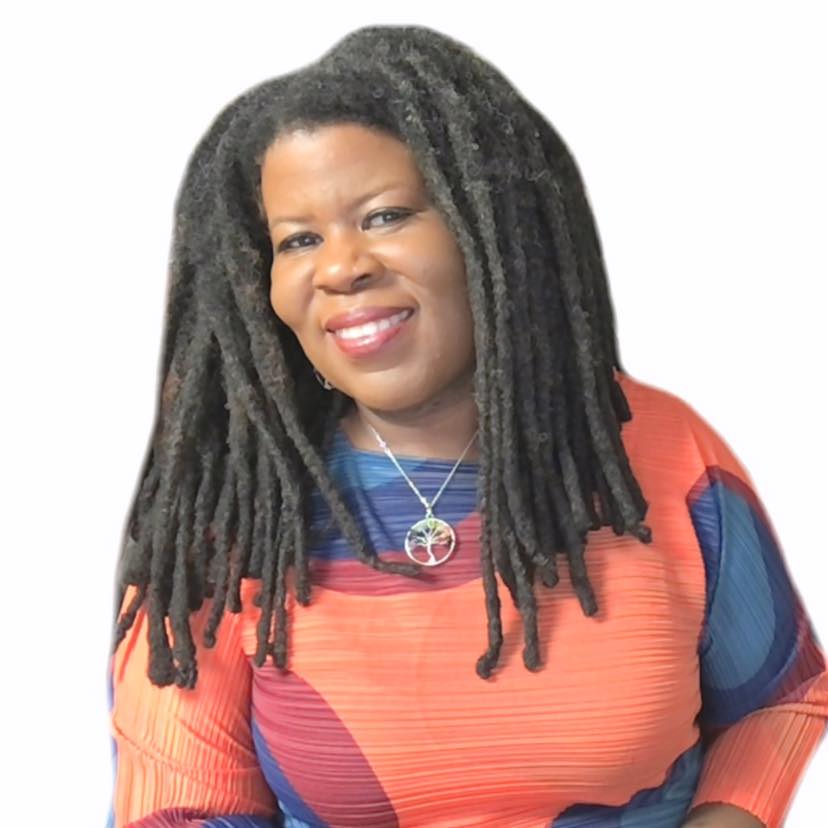
The Rev. Dr. Cheryl A. Lindsay, Minister for Worship and Theology (lindsayc@ucc.org), also serves a local church pastor, public theologian, and worship scholar-practitioner with a particular interest in the proclamation of the word in gathered communities. You’re invited to share your reflections on this text in the comments on our Facebook page: https://www.facebook.com/SermonSeeds.
A Bible study version of this reflection is at Weekly Seeds.