Sermon Seeds: Wrestling
Sunday, August 2, 2026
Tenth Sunday after Pentecost| Year A
(Liturgical Color: Green)
Lectionary Citations
Genesis 32:22-31 and Psalm 17:1-7, 15 • Isaiah 55:1-5 and Psalm 145:8-9, 14-21 • Romans 9:1-5 • Matthew 14:13-21
https://lectionary.library.vanderbilt.edu/texts/?z=p&d=67&y=17134
Focus Scripture: Genesis 32:22-31
Focus Theme: Wrestling
Series: Faithful and Vital (Click here for the series overview.)
Reflection
By Cheryl A. Lindsay
Wrestling is a violent sport. By its nature, it involves combatants who win, or prevail, by defeating their opponent with sustained force or explosive domination. The battle causes damage, injury, and scars as a testament to the struggle of the encounter. For there to be a draw, both sides have to agree to cease the fight, either in the moment or by pre-established rules. Wrestling hardly seems to be an optimal metaphor or activity to mark the formation of the nation that forms as a people chosen to witness to the covenant with the Holy One.
Yet, historically, countless nations have been birthed from a fight, whether that was a righteous act of deliverance, a battle for independence, or a hostile takeover. The nature of the conflict often proves to be formative in the emerging character of the nation especially as the factual account becomes amplified with mythological evaluation and framing. This text, therefore, offers insight into not only how Biblical Israel came into existence but how its identity was shaped by its founding and central patriarchal figure. The question this text invites the audience to consider is why was Jacob fighting?
Genesis 32 presents one of the most puzzling narratives in Genesis. As Jacob has had his reunion with Laban in Genesis 31 and commemorated it with the pillar of Mizpah, he faces another conflict, that with his brother Esau. After sending flocks to appease his brother and sending his family ahead of him across the River Jabbok, Jacob wrestles with a “man” all night at Peniel, “the face of God.” With whom did he wrestle? Was it with God? Was it with Esau, whose face he looks on in Genesis 33? Was it with his own conscience personified? The possibilities are rich, but ultimate clarity is elusive. Also, what role does this nocturnal encounter play in his life? If it is meant to be the moment of his transformation from trickster to faithful adherent, why then does he again deceive Esau at the period of their encounter (Gen. 33:15–17)?
Rodney S. Sadler, Jr.
I’ve described Jacob as a runner. When life gets hard, he takes off. In previous reflections, I have considered the wrestling match as being actually a one-sided battle in which Jacob fights against the embrace of a loving God who tries to hold him while Jacob struggles to get free. The truth is the story leaves the detail decidedly unclear. We do not, and will never, know who Jacob battled all night. In this reflection, let us consider that Jacob might have wrestled with himself.
There is so much interaction between Abraham and the Holy One that it seems interpretations assume that same consistency of communication with each succeeding generation holding the promise of the covenant. Yet, the accounts reflecting direct interaction between Jacob and the Holy One are rare. Most of the narrative reveals the often contentious relationships that Jacob enjoys with Esau and Laban. The Holy One’s presence is assumed and embedded in the background. Dreams seem to be the place of openness and vulnerability that enable Jacob to encounter God. Thus, identifying the man as a manifestation of the divine remains plausible, if not probable. At the same time, wrestling matches may take the form of a tournament in which successive battles take place with rounds of elimination until a winner is declared. Perhaps, this is why Jacob wrestles all night. He has a lot to reconcile with multiple parties.
The identity of the “man” (v. 24) is obscure. In much interpretation, it has been understood as a demon or a Canaanite numen. While that may have been the intention in some earlier form of the narrative, that does not help us to interpret the present form. Others have proposed that the shadowy antagonist was Esau in some earlier version. In that case, the night meeting is an anticipated scenario of the next day. Perhaps it is important that the narrative is not explicit. In its opaque portrayal of the figure, the narrative does not want us to know too much. It is part of the power of the wrestling that we do not know the name or see the face of the antagonist. To be too certain would reduce the dread intended in the telling. It is most plausible that in the present form, the hidden one is Yahweh. On the way to his brother whom he wants to appease, Jacob must deal with his God to whom he has made intercession (32:9–12). (The careful juxtaposition of brother and God in the destiny of Jacob is closely paralleled in the Cain narrative of 4:1–16.) But if it be Yahweh, we are shown something other than the promise-filled aspect of Yahweh known in the daylight. Now Jacob must deal with the terrifying face of the deity, hidden in sovereignty and not to be appeased or even found out. The adversary is identified only as “a man,” which leaves all the options open. The power of the stranger is as much in his inscrutability as in his strength. Jacob anticipates the wrath of his brother. But first he must face an assault from the deity. In the middle of the night, the forms merge and overlap. Perhaps in pondering this scene, the narrator, too, could not make out the forms very well. He could not discern whether the adversary is God or Esau. Surely there is more than Esau at work here. But it is not without reference to Esau. In the night, the divine antagonist tends to take on the features of others with whom we struggle in the day.
Walter Brueggeman
Admittedly, categorizing the Holy One as Jacob’s adversary is problematic. Further, within the broader context of the Jacob-Esau conflict, Esau has not been the aggressor. Even the brief reference to malevolent feelings toward Jacob were motivated by his brother’s duplicity in stealing his birthright and blessing. Jacob’s greatest opponent keeping him on the run is Jacob.
In all this activity, Jacob is thoroughly, if not desperately, in control. He has done all that is humanly possible to insure his safety. Calculation and strategy are practical matters, even as they increase his anxiety and his need to manipulate the situation for his own well-being. And his plans are all circuitous, skewed attempts at reconciliation. Even the commendable prayer is indirect, for the forgiveness he needs from his brother is not mentioned. Worship means first righting the wrongs, then offering up the sacrifices: “… at the altar, if you remember that your brother or sister has something against you … [go and] first be reconciled to your brother or sister” (Matt. 5:23, 24). Jacob does all the things that need not be done, omitting the one thing that is direct and therefore difficult for him. The most that can be said about his preparations is that they keep him busy.
Celia Brewer Sinclair
Jacob caused Esau real harm, yet he is still seeking a blessing for himself without offering repair, or even acknowledgment, to his brother. The same familial divisions and hostility will emerge among his own children, who represent the eventual tribal separations that will come to constitute Biblical Israel. Jacob’s behavior is far from exemplary. Despite his lacking behavior and inexcusable actions, the Holy One blesses Jacob. It does not make Jacob right; it demonstrates that God is gracious and redemptive beyond merit.
Something to wrestle with.
Reflection from Voices of People of African Descent
The 33rd General Synod adopted a Resolution to Recognize the United Nations International Decade for People of African Descent (2015-2024). As part of its implementation, Sermon and Weekly Seeds offers Reflection from Voices of People of African Descent related to the season or overall theme for additional consideration in sermon preparation and for individual and congregational study.
As I think about my time learning specialized crap no one cares about in the form of European philosophical thought and its relationship to biblical studies, I realize I actually had to care about it because it stifled my breath. I also began to realize that these ideas around “pure” culture and the subordination of women in leadership were stifling not only my breath but also that of the students I was coming into contact with during my first few years of seminary teaching. White male biblical scholarship is linked to the idea of objectivity in the academic study of the Bible. For generations biblical scholars studied under the belief that “objective” inquiry was the prime way to do biblical scholarship—that is, keeping one’s personal thoughts and feelings away from any inquiry into the biblical text. Objective reality as a stance for biblical interpretation is, I argue, one of the systemic evils of academic biblical studies. Renita Weems begins her seminal article on Womanist hermeneutics by stating that scholarship is now beginning to assert the “inherent biases and limitation of the historical-critical method as an objective, scientific approach to the Bible.”
I call stifled breath in the form of objectivity “evil” because I, as a Black woman in biblical studies, was not being trained to be my fully authentic, God-ordained self. Actively engaging issues of identity to confront objectivity in biblical interpretation has helped me “catch my breath” as I construct ways and means of reading biblical texts that are relevant in the halls of the academy, in the pulpits of churches, and on the sidewalks of society where lived experience occurs. Relationship across identity lines is important in this task. I contend that a turn to identity coupled with relationality can help us all begin to breathe. My Womanist identity is important to my particular constructive process that aims to transform stifled breath into full embodied breathing in regard to engaging the biblical text.
—Angela N. Parker, If God Still Breathes, Why Can’t I? Black Lives Matter and Biblical Authority
For Further Reflection
“Strength does not come from physical capacity. It comes from an indomitable will.” – Mahatma Gandhi
“If you’re not ready to fail, you’re not ready to succeed.” – John Cena
“Once you’ve wrestled, everything else in life is easy.” – Dan Gable
Works Cited
Brueggemann, Walter. Genesis: Interpretation: A Bible Commentary for Teaching and Preaching. Louisville: John Knox Press, 2010.
Sadler, Jr., Rodney S. “Genesis” Gale A. Yee, Ed. Fortress Commentary on the Bible: Two Volume Set. Minneapolis: Fortress Press, 2014.
Brewer Sinclair, Celia. Genesis (Interpretation Bible Studies). Louisville: Westminster John Knox Press, 1999.
Suggested Congregational Response to the Reflection
For the season after Pentecost, the themes are derived from the categories of the Marks for Faithful and Vital Churches. Each subseries will invite engagement with one Mark within the category. Each local church should choose how this will be incorporated. (This could be a sermon talk-back from the lens of the Mark, a direct discussion on the Mark, a prayer or song that relates to the Mark.) The response may also be a call to action embedded in the sermon or the sending inviting engagement beyond worship.
Mark for Congregational Response: Implementing safe conduct and abuse prevention practices and policies to foster a healthy environment for all people, particularly vulnerable individuals.
Worship Ways Liturgical Resources
https://www.ucc.org/worship-way/after-pentecost-10a-august-2/
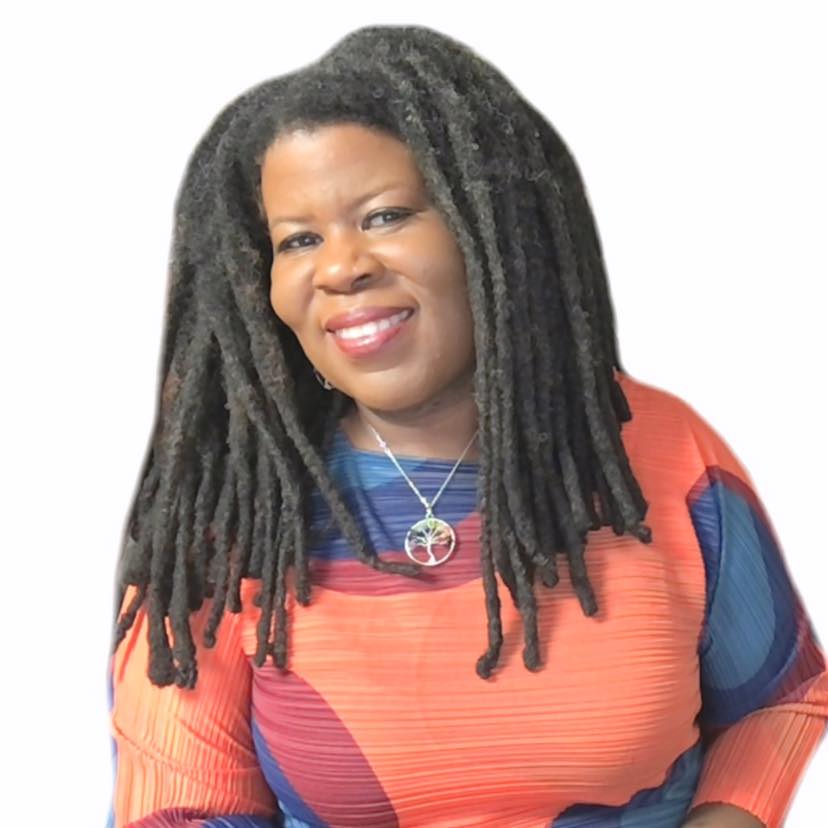
The Rev. Dr. Cheryl A. Lindsay, Minister for Worship and Theology (lindsayc@ucc.org), also serves a local church pastor, public theologian, and worship scholar-practitioner with a particular interest in the proclamation of the word in gathered communities. You’re invited to share your reflections on this text in the comments on our Facebook page: https://www.facebook.com/SermonSeeds.
A Bible study version of this reflection is at Weekly Seeds.