Sermon Seeds: To Settle Accounts
Sunday, September 13, 2026
Sixteenth Sunday after Pentecost| Year A
(Liturgical Color: Green)
Lectionary Citations
Exodus 14:19-31 and Psalm 114 or Exodus 15:1b-11, 20-21 • Genesis 50:15-21 and Psalm 103:(1-7), 8-13 • Romans 14:1-12 • Matthew 18:21-35
https://lectionary.library.vanderbilt.edu/texts/?z=p&d=75&y=17134
Focus Scripture: Matthew 18:21-35
Focus Theme: To Settle Accounts
Series: Faithful and Vital (Click here for the series overview.)
Reflection
By Cheryl A. Lindsay
Whenever I hear the words “settle accounts,” I think of those scenes in the Godfather movies where the head of the mafia family, especially Michael Corleone talks about “settling family business.” For that family, the business was retribution, vengeance, and a show of power. In legal businesses, settling accounts may refer to debt collection, including payment plans or negotiating an acceptable remuneration for services rendered. Of course, the gospel reading is not talking about monetary obligations, it addresses relational ones. How often do we treat them the same?
Unfortunately, considering relationship issues as transactions did not emerge as a modern phenomenon. There was a reason that Jesus responded to a question about forgiveness with a parable about monetary debt. This dialogue occurs within a larger teaching session that began by emphasizing accountability. Ignoring that context could lead to the erroneous opinion that forgiveness is separate from accountability. The term “settle accounts,” used in this passage, serves as a reminder that relationships bring obligations, and when they are not met the response to broken or unfulfilled obligations include accountability and forgiveness. Peter asks Jesus about forgiveness as an obligation.
Peter poses the question of “how often” he should forgive a member of the church who sins against him and he makes a generous proposal of forgiving seven times. This is already magnanimous, but Jesus takes the matter over the top, suggesting “seventy-seven times.” Seventy-seven times may allude to Genesis 4:24 as a reversal of Lamech’s threat of avenging himself seventy-seven times. It signaled extreme and unlimited vengeance-taking. Jesus’ saying turns Lamech’s vengeance on its head, and, by contrast, advocates unlimited forgiveness. It is, de facto, a complete renunciation of vengeance.
Anna Case-Winters
Peter’s query emphasizes the transactional. Jesus’ reply insists upon the relational. Vengeance is transactional (as the Corleone family demonstrates). Vengeance typically leads to escalation of conflict as it invites more of itself to the party. Vengeance causes more rifts, more acrimony, more brokenness, and ultimately more appetite for vengeance. The key outcome for vengeance is retaliation. With forgiveness, on the other hand, the hoped-for outcome is reconciliation.
Yet, without accountability, forgiveness fails to meet the standard for true reconciliation and settles for absolution, which is a one-sided benefit. In Peter’s question, the embedded assumption suggests that forgiveness is a one-sided burden that only asks something of the offended party. As a result, the offended continues to lose, and the offender continues to gain. That form of forgiveness causes more harm and compounds the offense upon the victim. The parable seems to amplify and justify that form while placing the burden entirely upon the offended.
When Dylan Roof massacred the Bible study class he was invited to join at Emanuel African Methodist Episcopal Church in Charleston, South Carolina, many of the victims’ families immediately and publicly stated that they had forgiven him. This caused controversy beyond the mass shooting itself as the forgiveness offered by some families became as prominent a story line as the shooting itself. There had been, at that stage in the legal process, no accountability for Roof. In fact, while he had been arrested, the initial officers stopped at a local fast food chain to get him a meal because he was hungry after committing mass murder.
Untold in the headlines were the families who explicitly did not forgive Roof of the murder of their loved one. I know a cousin of one of the victims who tried desperately to get their voices heard in the mass media outlets as a counter to what seemed an almost reflexive offer of forgiveness.
To be clear, families and victims may offer or withhold forgiveness in whatever way serves processing their grief, and I do not question the sincerity of any of them. At the same time, pointing to passages like these, without linking them to the larger teaching can lead to forgiveness without accountability, and that does not seem to be the obligation that Jesus imposes.
Parables are tricky because they tell a story to address a point, and sometimes the point gets lost in the story. Jesus was responding to a question that assumed the conditions that warranted forgiveness were in place but asked for a limit on extending forgiveness given those circumstances. The story does not speak to accountability because, within the teaching that coupled the two, the parable accountability has been satisfied. The lesson then suggests that forgiveness is unlimited when paired with accountability.
The parable pivots on the person who, despite having been forgiven their debt, chooses vengeance over reconciliation. Again, this is not about transaction and traditional interpretations that imply that because the Holy One forgives your sins, you should forgive the sins of others. It is about entering a relational way of being that, like the Holy One, seeks reconciliation over retaliation.
The parable itself makes its point and should probably not be reduced to a simple allegory where the king equals God in a point by point comparison with this king who starts with grace but finishes with torture. Jesus is telling a story about a Gentile tyrant and several features mark it as such: (1) the slave manages a vast sum of money (which indicates tax revenue and its management); (2) the king is worshiped by the servant (v. 26), which would not have been the practice for a Jew; (3) Jewish law would have prohibited selling the family into slavery; (4) a person could be imprisoned for debt but not tortured. The point is not that God is like this tyrant but that people who have received grace should extend it to others. By contrast with this tyrant, God desires that none should perish (18:14). It is only possible to be unforgiving if one is either forgetful or ungrateful. Awareness of the grace we have received allows us to be gracious and to lay aside the compulsion to seek vengeance. It is common knowledge that people who are hurt are prone to respond in kind. Psychologists describe a “mysterious mimesis,” in which victims of aggression imitate their aggressors. It is unconscious and perhaps instinctive. One thinks of all the occasions where hurt gets turned to hate. While injustice and injury must be addressed—not simply ignored or passively endured—forgiveness transforms all concerned. Forgiveness is rather part of the effort to stop the spiral of reprisals, rehabilitate the other, and empower change in the other. A new way is opened up when we return no one evil for evil (Rom. 12:17).
Anna Case-Winters
“Hurt people hurt people,” my pastoral counseling professor often reminded our class. Yet, that pattern is neither prescriptive nor inevitable. When accountability, including acknowledgment and efforts at repair, enters the narrative, it changes the dynamics of the relationship.
In 1994, approximately one million people were killed in the Rwandan genocide. The process of healing and restoration continues thirty years later. The progress made must be credited to an intentional effort at reconciliation that created opportunities for perpetrators to face their victims and their family members. This has led, over multiple encounters, many years, and (at times) shared living space, to forgiveness for the direct offender. Families have forgiven the person who murdered their loved one not as a means of absolving their guilt or justifying their actions, but as a way to move forward having witnessed the demonstrated remorse and repentance of the perpetrator. While Rwanda has participated in military conflicts beyond its borders, there has not been a civil war or conflict since the genocide. Their choice to take a path toward reconciliation and repair has disrupted the cycle of vengeance and the violence that accompanies it.
The way of Jesus disrupts the transactional, often violent, and retributive systems of this world while offering a path of accountability, grace, and mercy that leads to restoration, repair, and wholeness. This is the way to settle accounts.
Reflection from Voices of People of African Descent
The 33rd General Synod adopted a Resolution to Recognize the United Nations International Decade for People of African Descent (2015-2024). As part of its implementation, Sermon and Weekly Seeds offers Reflection from Voices of People of African Descent related to the season or overall theme for additional consideration in sermon preparation and for individual and congregational study.
Excerpt from The Pink Robe Chronicles by Melva Sampson
“In the documentary The Eternal Song, a First Nations elder reflects on her father’s strange and inconsistent behavior. She traced it back not to personality, but to colonization—how colonization opens a portal to imbalance. That imbalance plays out in our families, our communities, and our psyches. She said that to restore balance, we must come to a place of understanding—a form of forgiveness not shaped by religious duty but by ancestral wisdom. Forgiveness, she said, is what allows us to become medicine for other people. It is in the stillness and quietness, in the space of ceremony, that the supernatural reveals what is needed. And that, she said, is forgiveness. From that understanding, my reflection shifts—from loss to liberation.”
For Further Reflection
“Pain could be controlled. Its debts could be deferred. But there were other debts that could not be deferred. Debts of honor. Debts of love.” ― Miles Watson
“Life is too short to have debts and doubts,
Pay the bills, no regrets, be up and about.” ― Ana Claudia Antunes
“In the world I lived in, the world of human people, there were ties and debts and consequences and good deeds. That was what bound people to society; maybe that was what constituted society. And I tried to live in my little niche in it the best way I could.” ― Charlaine Harris
Works Cited
Case Winters, Anna. Matthew (Belief: A Theological Commentary on the Bible). Louisville: Westminster John Knox Press, 2015.
Suggested Congregational Response to the Reflection
For the season after Pentecost, the themes are derived from the categories of the Marks for Faithful and Vital Churches. Each subseries will invite engagement with one Mark within the category. Each local church should choose how this will be incorporated. (This could be a sermon talk-back from the lens of the Mark, a direct discussion on the Mark, a prayer or song that relates to the Mark.) The response may also be a call to action embedded in the sermon or the sending inviting engagement beyond worship.
Mark for Congregational Response: Seeking to understand the lived experiences of the wider community, particularly those whose experiences differ from those in the Local Church in identity, ability, age, gender, race, and/or religion.
Worship Ways Liturgical Resources
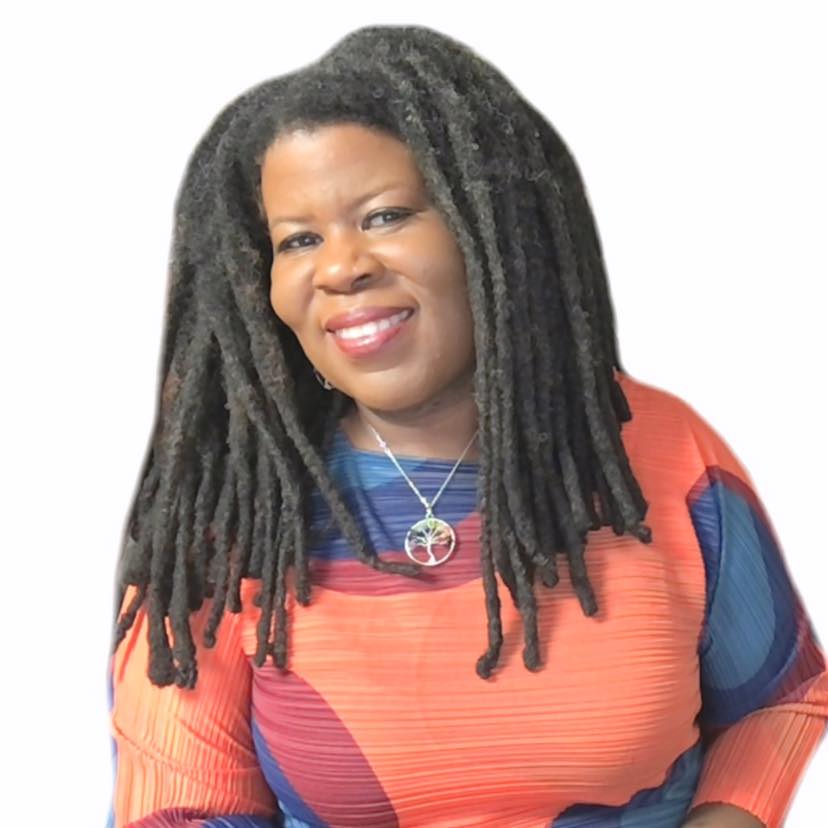
The Rev. Dr. Cheryl A. Lindsay, Minister for Worship and Theology (lindsayc@ucc.org), also serves a local church pastor, public theologian, and worship scholar-practitioner with a particular interest in the proclamation of the word in gathered communities. You’re invited to share your reflections on this text in the comments on our Facebook page: https://www.facebook.com/SermonSeeds.
A Bible study version of this reflection is at Weekly Seeds.