Sermon Seeds: Those Who Have Been Invited
Sunday, October 11, 2026
Twentieth Sunday after Pentecost| Year A
(Liturgical Color: Green)
Lectionary Citations
Exodus 32:1-14 and Psalm 106:1-6, 19-23 •Isaiah 25:1-9 and Psalm 23 • Philippians 4:1-9 •Matthew 22:1-14
https://lectionary.library.vanderbilt.edu/texts/?z=p&d=79&y=17134
Focus Scripture: Matthew 22:1-14
Focus Theme: Those Who Have Been Invited
Series: Faithful and Vital (Click here for the series overview.)
Reflection
By Cheryl A. Lindsay
Invitations can cause excitement, anxiety, and longing. An invitation to a special event may generate anticipation for a wonderful celebration. Waiting for an invitation to a desired occasion may inspire feelings of insecurity, inadequacy, and isolation. Knowing that an event is being planned may bring hopefulness that an invitation is on the way. Those feelings described above assume that the invitation is wanted, appreciated, and anticipated. What happens when we receive an invitation to a place we don’t want to be?
The reasons to dread an invitation may be multifold. We may not have an infinity for the host. We may have competing engagements and have to make a difficult choice. Sometimes, we would rather stay home, enjoy solitude, and remain comfortable in the known. Invitations often come with some expectation upon the guest. Mutual hospitality and good manners may invite not only our presence but also a gift for the host. We may interact with people we do not know and may question their suitability for the occasion. Invitations are not simple things.
The gospel passage continues the series of parables focused on critique of religious leaders. In this case, the leaders are likened to guests who refuse a gracious, lavish, and extraordinary invitation.
These parables are not in the least subtle in their criticism of the religious leaders. The chief priests and the Pharisees realize he is “speaking about them.” They would arrest him on the spot were it not for the crowds (21:45–46). Jesus does not ease off and let the matter rest but tells yet another excoriating parable along the same lines. This one is about a king whose invited guests will not come to the wedding banquet. Not only do they fail to respond to the invitation of the king, they even kill the messengers who deliver the invitation. They are destroyed and the king widens the invitation—taking it to the streets. The result is that the hall is filled with guests.
Anna Case WInters
Jesus has shared a series of parables about the reign of God in an adversarial encounter with the religious leaders of his day. The acrimony simmers beneath the surface, but it is clearly present and felt. The ministry and message of Jesus is disruptive and can be off-putting by those who have aligned themselves with the kingdoms of this world in manner and deed if not in speech and word. Earlier in the gospel, Jesus quotes the prophet Isaiah, “This people honors me with their lips, but their hearts are far from me; in vain do they worship me, teaching human precepts as doctrines.” (Matthew 15:8-9) Jesus uses these encounters to deconstruct those human precepts to call his audience to faithful living according to God’s will rather than human design.
As Alejandro Duarte articulates about Matthew’s account, “The ethics of this gospel is not an ethics of principles to be implemented, but an ethics of response to the presence of God and Christ in my/our history.” When asked about doctrine, Jesus tells a story. When questioned on precepts, Jesus tells a story. The answers to questions about belief come not from commands, but from a story that demonstrates how human beings relate to God and to one another. Even as Jesus shares the greatest commandment–to love God and your neighbor as yourself–it is in the context of a story. Following Jesus is not about what you believe but how you relate.
While many interpreters have readily found judgment on Israel in 22:1–10, they have been less happy about finding it extended to the wedding guests in the added scene of 22:11–14. The debates are long-standing. Origen engaged the question of this display of God’s rejecting anger. Luther called it a “terrible Gospel.” The referent for the requisite “wedding robe” has been debated. Initially, the dominant reading identified it with good works, particularly works of love (Augustine). Others, though, saw it as baptism or Christ put on in baptism (Aquinas), or the Holy Spirit. The Reformers (Zwingli, Luther, Calvin) saw it as active faith expressed in works of love. This church-centered reading of 22:11–14 regards Israel’s rejection (supposedly presented in 22:1–10) as providing a warning to the church.
Warren Carter
At the same time, that relationship is distinctly invitational. There is nothing compulsory about the kindom of God. The wedding invitation analogy resonates for that reason. When those on the guest list spurn the invitation, the host expands those who have been invited. The retaliation that takes place within the parable does not rise from the rejected invitation but from the violence exacted on those charged with delivering the invitation.
Still, the invitation does come with expectation just as the kindom of God has standards.
Throughout the ages Christians have offered different interpretations of what the wedding garment represents. But we can see throughout Matthew (Mt 7:21, for example) that people want to follow Jesus and get the benefits of the kingdom on their terms. So, for instance, they refuse to admit their spiritual poverty. They’re offended by getting lumped in with little children (Mt 11:25-30) or, horror of horrors, with tax collectors and prostitutes. Or they assume they can sign up with Jesus but not actually follow him (Mt 8:20) or listen to him (Mt 13:1-24). Or they can respond to Jesus without building their lives on his words (Mt 7:24-27). Throughout this Gospel Jesus has made it clear that we don’t follow him on our own terms. We don’t come to him with our own choice of wedding garments. As we respond to his invitation of “Come to me” (Mt 11:28), he will change our heart first and then our behavior and relationships to others. In other words, we’ll start wearing the right clothing for the wedding feast, removing the soiled clothes of racism, bitterness, self-righteousness, anger and rage, lust and marital unfaithfulness, dishonesty, materialism, anxiety, contempt toward vulnerable people and greed—to name just a few of our inappropriate garments. But in circling back to Jesus’ doorway statement in Matthew 5:3, “Blessed are the poor in spirit,” we’ll also realize this isn’t a heroic journey for spiritual superstars. It’s a simple journey for little-faiths who constantly cry out for mercy.
Matt Woodley
While the invitation has been extended broadly, widely, and freely, receiving and accepting the invitation to discipleship remains a privilege that should be treated with honor and respect. Those who have been invited should remember with reverence and awe who has extended the invitation and the sacred space they have been opened for them to enter.
Reflection from Voices of People of African Descent
The 33rd General Synod adopted a Resolution to Recognize the United Nations International Decade for People of African Descent (2015-2024). As part of its implementation, Sermon and Weekly Seeds offers Reflection from Voices of People of African Descent related to the season or overall theme for additional consideration in sermon preparation and for individual and congregational study.
Invitation to Love”
By Paul Laurence Dunbar
Come when the nights are bright with stars
Or when the moon is mellow;
Come when the sun his golden bars
Drops on the hay-field yellow.
Come in the twilight soft and gray,
Come in the night or come in the day,
Come, O love, whene’er you may,
And you are welcome, welcome.
You are sweet, O Love, dear Love,
You are soft as the nesting dove.
Come to my heart and bring it rest
As the bird flies home to its welcome nest.
Come when my heart is full of grief
Or when my heart is merry;
Come with the falling of the leaf
Or with the redd’ning cherry.
Come when the year’s first blossom blows,
Come when the summer gleams and glows,
Come with the winter’s drifting snows,
And you are welcome, welcome.
For Further Reflection
“I’d learned enough from life’s experiences to understand that destiny’s interventions can sometimes be read as invitation for us to address and even surmount our biggest fears. It doesn’t take a great genius to recognize that when you are pushed by circumstance to do the one thing you have always most specifically loathed and feared, this can be, at the very least, an interesting growth opportunity.” ― Elizabeth Gilbert
“Tables aren’t meant for just one person. That’s a desk. A desk only admits one. And who holds a dinner at a desk anyway?” ― Koki Oyuke
“If you are a dreamer, come in,
If you are a dreamer, a wisher, a liar,
A hope-er, a pray-er, a magic bean buyer…
If you’re a pretender come sit by my fire
For we have some flax-golden tales to spin.
Come in!
Come in!” ― Shel Silverstein
Works Cited
Case Winters, Anna. Matthew (Belief: A Theological Commentary on the Bible). Louisville: Westminster John Knox Press, 2015.
Suggested Congregational Response to the Reflection
For the season after Pentecost, the themes are derived from the categories of the Marks for Faithful and Vital Churches. Each subseries will invite engagement with one Mark within the category. Each local church should choose how this will be incorporated. (This could be a sermon talk-back from the lens of the Mark, a direct discussion on the Mark, a prayer or song that relates to the Mark.) The response may also be a call to action embedded in the sermon or the sending inviting engagement beyond worship.
Mark for Congregational Response: Dismantling physical and cultural barriers that hinder accessibility or inhibit connection or relationship with the Local Church and community.
Worship Ways Liturgical Resources
https://www.ucc.org/worship-way/after-pentecost-20a-october-11/
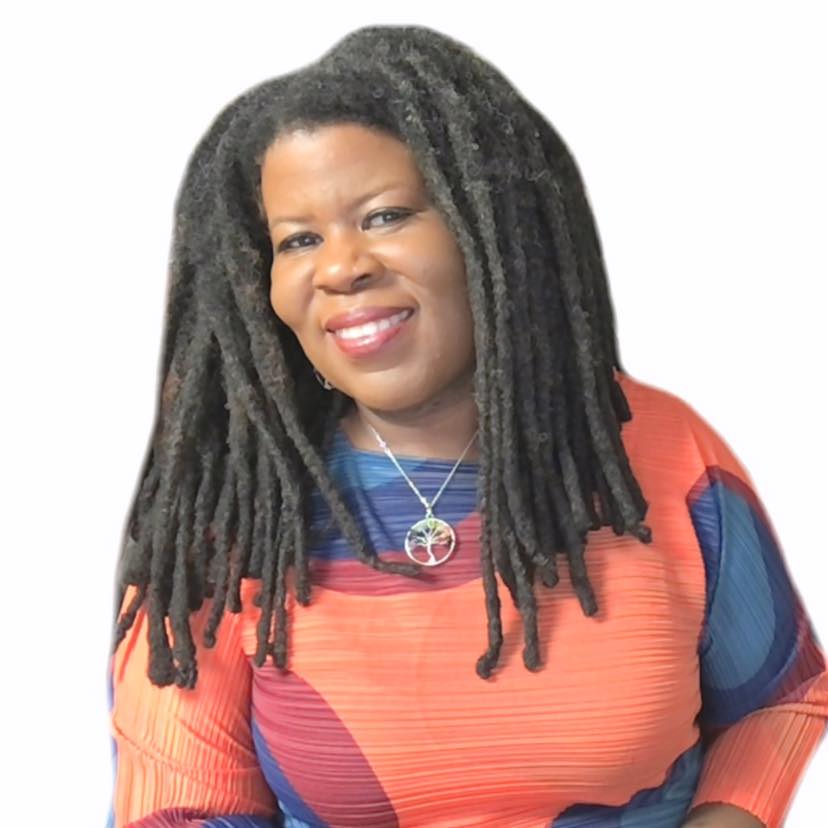
The Rev. Dr. Cheryl A. Lindsay, Minister for Worship and Theology (lindsayc@ucc.org), also serves a local church pastor, public theologian, and worship scholar-practitioner with a particular interest in the proclamation of the word in gathered communities. You’re invited to share your reflections on this text in the comments on our Facebook page: https://www.facebook.com/SermonSeeds.
A Bible study version of this reflection is at Weekly Seeds.