Sermon Seeds: The People May Drink
Sunday, September 27, 2026
Eighteenth Sunday after Pentecost | Year A
(Liturgical Color: Green)
Lectionary Citations
Exodus 17:1-7 and Psalm 78:1-4, 12-16 • Ezekiel 18:1-4, 25-32 and Psalm 25:1-9 • Philippians 2:1-13 • Matthew 21:23-32
https://lectionary.library.vanderbilt.edu/texts/?z=p&d=77&y=17134
Focus Scripture: Exodus 17:1-7a
Focus Theme: The People May Drink
Series: Faithful and Vital (Click here for the series overview.)
Reflection
By Cheryl A. Lindsay
The story about the build up to the French Revolution is that one of their monarchs, Queen Marie Antoinette, when she heard her subjects were starving, responded by saying, “Let them eat cake.” Now, this story was not true. The real story of her suggesting that the palace provide bread to the masses was entangled with a quote of another royal predecessor found in a book that was written when Marie Antoinette was only ten years old. It was used to spark revolutionary fervor like a match dropped on gasoline to start a fire. It was believed and has been solidified in the telling of the revolution for centuries because the narrative beneath the myth fits the idea of a distant sovereign cavalier and callous about the basic human needs and conditions of those under her authority. It makes sense that the people found it believable.
But, why would the children of the Exodus narrative accept or write a story that questioned the presence and loyalty of the Holy One who liberated them from oppressive rule, allowed them safe passage when under their enemies pursuit, and who had given them manna to eat?
Perhaps the problem rested in their reliance on the miraculous action as evidence of God’s abiding presence. In the mundaneity of life, God seemed removed, uninterested, and perhaps unnecessary. Therefore, the shift to crisis instigates a crisis not only of resourcing basic needs,
but also of faith.
Testing God. What does it mean? It is made especially problematic by the fact that it is appropriate for God to test Israel (15:25; 16:4) but not for Israel to test God. Verse 7 focuses the issue in the question, “Is the Lord among us or not?” The asking of this question in itself is not a testing of God. Testing has to do with “putting God to the proof,” that is, seeking a way in which God can be coerced to act or show himself. It is to set God up, to try to force God’s hand in order thereby to determine concretely whether God is really present or not. Israel’s testing of God consisted in this: if we are to believe that God is really present, then God must show us in a concrete way by making water materialize. It is to make one’s belief in God contingent upon such a demonstration. It is, in essence, an attempt to turn faith into sight.
Terence E. Fretheim
The tension between faith and evidence is exacerbated by the truth that the Holy One does provide demonstrations, signs, and other tangible proof of presence, intervening care, and saving acts. This is the God who parted the Red Sea, yet the people currently have no source of water. The God who breached the house of Pharaoh will plagues and calamity extending throughout the nation while shielding the oppressed Israelites also poured manna seemingly out of thin air. The God of the Covenant, who leads the people on this journey to a destination of promise, seems to be taking an excessively long route.
Trust has been built through the demonstrations, and to sustain faith, the people have been charged to memory of God’s wonderful and miraculous acts in the collective past. At the same time, the remembering may lead to a sense of entitlement that positions God as the fulfiller of humans’ every desire rather than the One who is sovereign and compassionate.
It places God in the role of servant, at the beck and call of one in any difficulty. Besides violating the Godness of God, it endangers the understanding of faith. It leads to such attitudes as: God did not heal or protect you, because you did not have enough faith. If you had, God would have acted. That is to put God to the test, demonstrating an inappropriate confidence that God will in fact intervene at the behest of one who has faith.
Terence E. Fretheim
Underlying these attitudes lies a desire to control the Holy One, to make the Creator subject to creation, and to elevate humanity’s will above the divine’s. There is a difference between faith and entitlement, hope and expectation, trust and demands. On the one side, the response to trying conditions remembers and acknowledges the character of God and centers that in anticipating how the Holy One might respond to human need. On the other is self-centered, grievous claim that God owes humanity a smooth, trouble-free life.
Still, the Holy One demonstrates mercy and provision once again while the people fail to work toward their own solutions:With the elders as witnesses, Moses is to take his trusty staff and strike the rock at Horeb; water will come forth. But it is not simply Moses and the staff that will work wonders; God himself will stand before Moses while Moses does this. God works in and through Moses and his staff (and with the rock!) to provide water for the people. The reference back to Moses’ striking the Nile shows that this “striking” is its positive counterpart. Just as Moses’ striking the Nile led to water being unfit to drink, so here his striking the rock leads to water fit to drink. This is a manifestation of God’s creative activity, bringing water into a part of the world under the control of chaotic forces (see at 15:22–27). This theme will be picked up in the visions of the new creation in the later prophets (Isa. 35:6–7; 41:17–18; Ezek. 36:24–26; 47:7–12; cf. I Cor. 10:4). God’s standing “on the rock at Horeb” is another item anticipating events at Sinai (see the introduction to this section). Water and law are linked. The Sinai experience is enclosed by wilderness stories. The context in which the law is given to Israel is life in the midst of chaos and disorder. It is a place where lifelessness rules more than life, where the gifts of God’s creation—such basic things as food and water—are scarce. The wilderness is not the creation as God intended it to be, but God’s creative activity is having positive effects.
Terence Fretheim
Again, the Holy One has delivered the people from their trial. At the same time, God uses Moses and a tangible gift of the earth to perform the miracle. It is a reminder that the Holy One works through people and that we are participants in our collective salvation. That ultimately is the sustenance that the people may drink.
For Further Reflection
“Instead of communicating “I love you, so let me make life easy for you,” I decided that my message needed to be something more along these lines: “I love you. I believe in you. I know what you’re capable of. So I’m going to make you work.” ― Kay Wills Wyma
“The abusive man’s high entitlement leads him to have unfair and unreasonable expectations, so that the relationship revolves around his demands. His attitude is: “You owe me.” For each ounce he gives, he wants a pound in return. He wants his partner to devote herself fully to catering to him, even if it means that her own needs—or her children’s—get neglected. You can pour all your energy into keeping your partner content, but if he has this mind-set, he’ll never be satisfied for long. And he will keep feeling that you are controlling him, because he doesn’t believe that you should set any limits on his conduct or insist that he meet his responsibilities.” ― Lundy Bancroft
“You cannot help people permanently by doing for them, what they could and should do for themselves.” ― Abraham Lincoln
Works Cited
Fretheim, Terrance E. Exodus: Interpretation: A Bible Commentary for Teaching and Preaching. Louisville: John Knox Press, 2010.
Suggested Congregational Response to the Reflection
For the season after Pentecost, the themes are derived from the categories of the Marks for Faithful and Vital Churches. Each subseries will invite engagement with one Mark within the category. Each local church should choose how this will be incorporated. (This could be a sermon talk-back from the lens of the Mark, a direct discussion on the Mark, a prayer or song that relates to the Mark.) The response may also be a call to action embedded in the sermon or the sending inviting engagement beyond worship.
Mark for Congregational Response: Seeking to understand the lived experiences of the wider community, particularly those whose experiences differ from those in the Local Church in identity, ability, age, gender, race, and/or religion.
Worship Ways Liturgical Resources
https://www.ucc.org/worship-way/after-pentecost-18a-september-27/
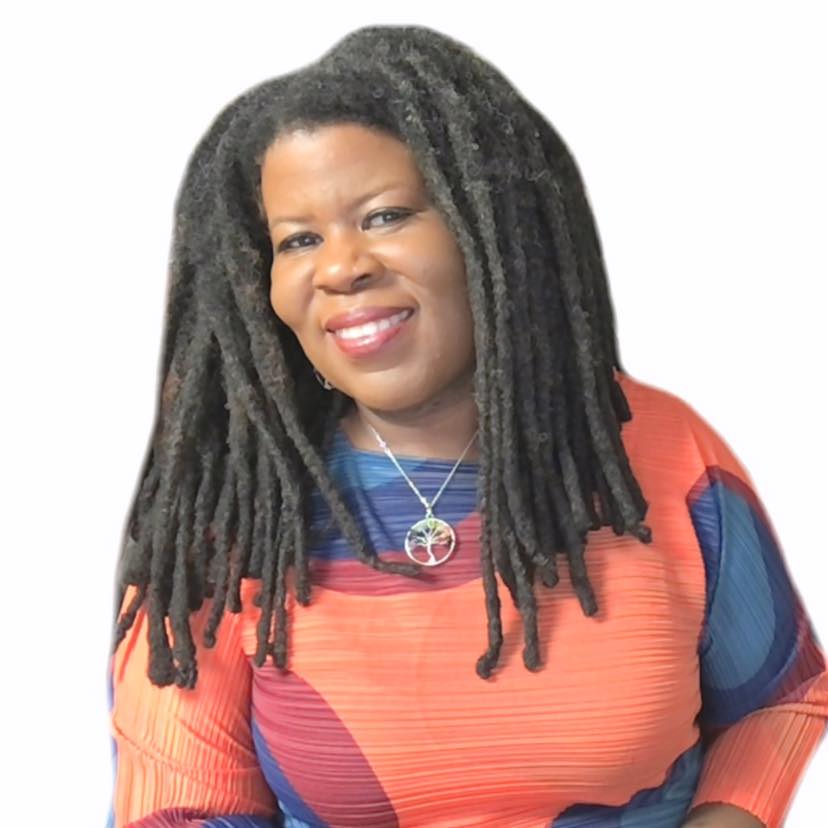
The Rev. Dr. Cheryl A. Lindsay, Minister for Worship and Theology (lindsayc@ucc.org), also serves a local church pastor, public theologian, and worship scholar-practitioner with a particular interest in the proclamation of the word in gathered communities. You’re invited to share your reflections on this text in the comments on our Facebook page: https://www.facebook.com/SermonSeeds.
A Bible study version of this reflection is at Weekly Seeds.