Sermon Seeds: Out of the Water
Sunday, August 23, 2026
Thirteenth Sunday after Pentecost| Year A
(Liturgical Color: Green)
Lectionary Citations
Exodus 1:8-2:10 and Psalm 124 • Isaiah 51:1-6 and Psalm 138 • Romans 12:1-8 • Matthew 16:13-20
https://lectionary.library.vanderbilt.edu/texts/?z=p&d=70&y=17134
Focus Scripture: Exodus 1:8-2:10
Focus Theme: Out of the Water
Series: Faithful and Vital (Click here for the series overview.)
Reflection
By Cheryl A. Lindsay
Water imagery permeates the biblical narrative. From the primordial waters over the deep in Genesis 1 to crossing the Red Sea in the Exodus narrative to Jesus’ baptism in the Jordan to his encounter with the Samaritan woman at Jacob’s well, water provides a backdrop and central role in divine creation, intervention, and engagement. Metaphorically, water represents cleansing and renewal as well as power and transformation. Water nourishes and sustains yet it also causes damage and life-threatening circumstances.
Beyond the biblical canon, water keeps life alive. Is there any living entity, plant or animal, that does not require water for survival? Water continues to cover most of the vast surface of the earth in its unadulterated form. When the water that comprises living beings as well as the dwells in the atmosphere, the presence of water overwhelms. Water reaches all around us and within us. How can we not be fixated and our lives revolve around water?
The Exodus narrative opens with a water story. Every good narrative has protagonists and antagonists, catalysts, and a problem. The impetus for the devastating position of the Hebrew people rests with change in leadership and relationship: “A new king arose over Egypt who did not know Joseph.” The narrator does not infer that the new king would, should, or could have known Joseph personally. The knowing described suggests the new king did not recognize the connection of the Egyptians to Joseph and Joseph to the Hebrews; therefore, the king did not appreciate or continue the harmonious relationship between the two peoples. The problem was a lack of relational memory from the king, which enabled him to generate disconnection and acrimony among the people aligned with him.
Exodus 1–2 describes the process by which the Israelites are enslaved in Egypt, setting the stage for a story of salvation as act of divine liberation. But God is absent as an active force in the life of the Israelites during their enslavement and genocide of infant males at the hands of Pharaoh. This absence of God in Exodus 1–2 allows the biblical writers to explore the themes of power and oppression from a human perspective. The story moves quickly. Years have transpired since Joseph ruled in the land of Egypt, and the Israelites’ guest status has long been forgotten. A series of vignettes provides insight into the growing alienation between the Egyptians and the Israelites, prompting a range of human responses, including fear of Pharaoh and his oppression of the Israelites, the civil disobedience of the midwives against Pharaoh’s command for genocide (1:1–21), and the violence of Moses’ initial attempt at liberation, when he kills an Egyptian (1:22–2:25).
Thomas D. Dozeman
The story pivots not on direct divine intervention; rather, the midwives refusal to kill Hebrew boys and their shrewd dealing with Pharaoh thwarts his plans. He does not want to destroy the Hebrew population; the Egyptian economy depends upon them. The intent is to exert control and inspire fear among the Hebrews so that they will continue to be subdued and subjugated under imperial oppression. The irony is that no one exhibits more fear-based behavior than Pharaoh.
In 1:8–21, Pharaoh and the midwives provide conflicting responses to the Israelites’ fertility, responses that lead to different ethical actions. Pharaoh reacts with fear over losing power (1:9–10). To safeguard his power over Israel, Pharaoh institutes forced labor (1:11–14). But when slave labor does not curtail the birthrate of the Israelites, he secretly commands the genocide of all male babies (1:15–16). Pharaoh’s fear forces him to distinguish between “his people” and “the Israelites” in order to maintain social control. Social alienation spirals out of control, leading to oppression and genocide. The midwives Shiphrah and Puah resist the abusive power of Pharaoh though civil disobedience. Their conflict with Pharaoh is developed through a play on the motifs “to see” and “to fear,” words that often sound similar in Hebrew. Pharaoh secretly instructs the midwives to kill every male Hebrew child that they “see” born on the birthstones (1:16). But the narrator tells the reader that the midwives “fear” God, prompting their civil disobedience; they allow the male babies of the Israelite women to live. The midwives’ “fear of the God” is a generic description of the deity not intended to be a statement about formal religious practice but to position conscience against the tyranny of Pharaoh, thus raising the question: Will the midwives conform to the command of Pharaoh and act on what they “see,” namely, the birth of Hebrew male babies condemned to death by the state? Or will they follow their conscience and act on their “fear of the God,” thus letting the babies live? The midwives follow their conscience and undertake civil disobedience. They allow the male babies to live (1:17), and they lie to account for their actions (1:18–19). When Pharaoh inquires why his order of genocide is not being executed, the midwives play on his fear, accentuating the difference between the Egyptians and the Israelites that was introduced by Pharaoh. They state: “The Hebrew women are not like the Egyptian women” (v. 19a). Then the midwives play on Pharaoh’s more primordial fear, the explosive population growth of the Israelite: “[The Israelite women] are teeming with life, and before the midwife comes to them, they give birth” (author trans., v. 19b).
Thomas D. Dozeman
The midwives’ deceptive explanation to protect the Hebrew boys contrasts with Pharaoh’s deceptive justification for his oppressive regime and policies toward them. Further, the source and response of their respective fears also distinguish their actions and consequences. Pharaoh was driven by an imagined fear of Hebrew power overcoming his own. The midwives feared God and, through their actions, proclaimed a power hierarchy in which Pharaoh’s power paled in comparison to divine power and their ethical commitments.
Then there is the role of the water, specifically the Nile River. What was meant by Pharaoh to be the instrument of death and destruction becomes the conduit for compassion, which paves the way for the long journey toward liberation for the oppressed. The text concludes by narrowing and shifting the focus from the power struggle to a singular opportunity for saving action that will have expansive implications for the future. As Terence E. Fretheim notes, “The princess’s calm compassion toward the child and her commitment to long-term noncompliance with her father’s brutal decree constitute a public demonstration of the bankruptcy of his policy. Inasmuch as the tradition never hints that this policy was carried forward, the princess’s response may have had some effect.”
Moses was birthed from the gestational waters of a mother determined to shield him from Pharoah’s death-dealing reach. She places him in safety in the waters that would have been his grave had the monarch’s instructions been followed. Then, his own offspring secures his safety as she adopts her father’s enemy as her child and his grandson.
The power of water to defy containment or control while renewing, cleansing, and carving a new landscape launches the Exodus narrative, a story of a liberating God setting the oppressed free. The Holy One’s creative acts continue out of the water.
Reflection from Voices of People of African Descent
The 33rd General Synod adopted a Resolution to Recognize the United Nations International Decade for People of African Descent (2015-2024). As part of its implementation, Sermon and Weekly Seeds offers Reflection from Voices of People of African Descent related to the season or overall theme for additional consideration in sermon preparation and for individual and congregational study.
“Every day, when I drink water or take a dish from the cupboard, I stand before this reminder that we yearn for love—that we seek it—even when we lack hope that it really can be found.”
― bell hooks, All About Love: New Visions
For Further Reflection
“A river seems a magic thing. A magic, moving, living part of the very earth itself.” ― Laura Gilpin
“Nothing is softer or more flexible than water, yet nothing can resist it.” — Lao Tzu
“In one drop of water are found all the secrets of all the oceans.” — Kahlil Gibran
Works Cited
Dozeman, Thomas D. Gale A. Yee, Ed. Fortress Commentary on the Bible: Two Volume Set. Minneapolis: Fortress Press, 2014.
Fretheim, Terence E. Exodus: Interpretation: A Biblical Commentary for Teaching and Preaching. Louisville: Westminster John Knox Press, 2010.
Suggested Congregational Response to the Reflection
For the season after Pentecost, the themes are derived from the categories of the Marks for Faithful and Vital Churches. Each subseries will invite engagement with one Mark within the category. Each local church should choose how this will be incorporated. (This could be a sermon talk-back from the lens of the Mark, a direct discussion on the Mark, a prayer or song that relates to the Mark.) The response may also be a call to action embedded in the sermon or the sending inviting engagement beyond worship.
Mark for Congregational Response: Nurturing gifts for ministry among lay people and equipping new generations of faith leaders.
Worship Ways Liturgical Resources
https://www.ucc.org/worship-way/after-pentecost-13a-august-23/
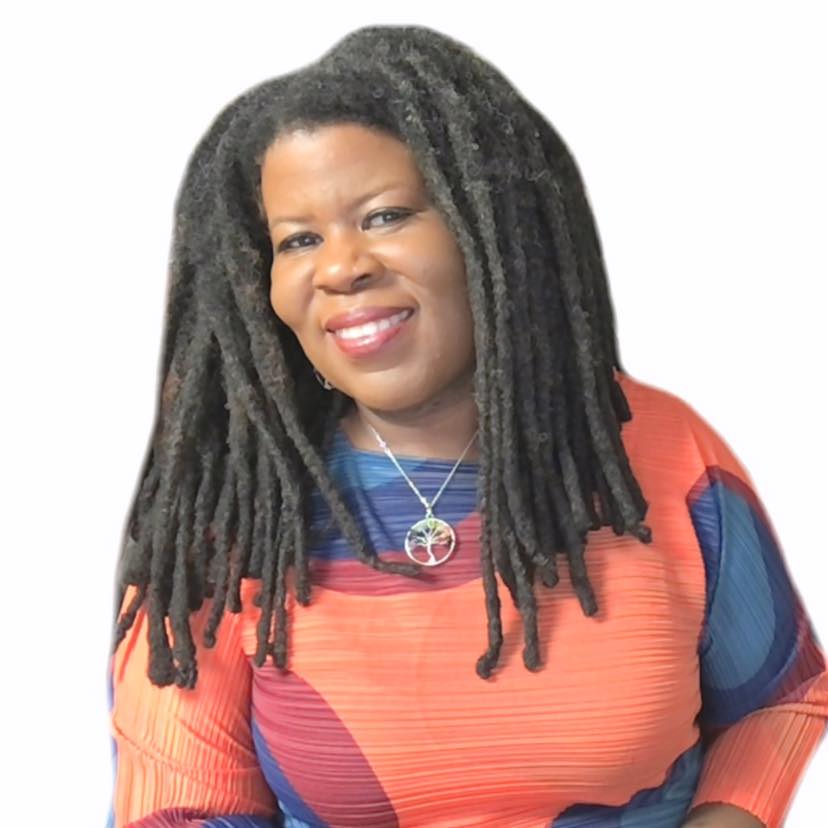
The Rev. Dr. Cheryl A. Lindsay, Minister for Worship and Theology (lindsayc@ucc.org), also serves a local church pastor, public theologian, and worship scholar-practitioner with a particular interest in the proclamation of the word in gathered communities. You’re invited to share your reflections on this text in the comments on our Facebook page: https://www.facebook.com/SermonSeeds.
A Bible study version of this reflection is at Weekly Seeds.