Sermon Seeds: Lived as an Alien
Sunday, August 9, 2026
Eleventh Sunday after Pentecost| Year A
(Liturgical Color: Green)
Lectionary Citations
Genesis 37:1-4, 12-28 and Psalm 105: 1-6, 16-22, 45b • 1 Kings 19:9-18 and Psalm 85:8-13 • Romans 10:5-15 • Matthew 14:22-33
https://lectionary.library.vanderbilt.edu/texts/?z=p&d=68&y=17134
Focus Scripture: Genesis 37:1-4, 12-28
Focus Theme: Lived as an Alien
Series: Faithful and Vital (Click here for the series overview.)
Reflection
By Cheryl A. Lindsay
I imagine it must be an incredible adjustment moving from place to place. The nomadic lifestyle used to be normative for most of human history. One mark of what have been labeled as great civilizations has been the ability to settle, build roads and permanent buildings, and establish an enduring infrastructure. While it is overly simplistic to ignore the ability of nomadic people groups to also root themselves in other ways, through culture, values, and tradition, the impact of a stable location on a people is hard to ignore. It becomes part of their identity and strategy for survival, community, and defense. Outsiders attempting to enter these defined territories encounter suspicion, resistance, and even violence. When most of the people groups in a geographic region live as nomads, that condition offers no more safety to the lone wanderer. In fact, it makes it more difficult to understand the nature of the borders for the tribes or nation-states.
As the Genesis narrative particularizes its attention on the descendants of Abraham and Sarah, the dominant civilization in the region is Egypt, and they serve as foil and foe throughout the narrative. Egypt represents not only a particular historical geo-political entity. It also represented the role of empire, a consistent theological and political contrast to the kindom of God. There will be other empires, including the Babylonians, Assyrians, and Romans, to name a few that feature prominently in both Testaments. Egypt was not only the first, it provided a template for the sometimes strained, sometimes allied, sometimes hostile relationship based on human hierarchy and pursued power experienced by the descendants of Jacob (also known as the children of Israel).
In the text, Jacob has settled, returning to the land his father immigrated to. A common perception of migratory people is that they move in linear ways…always finding a new location. The reality for many transitory people is that they move in a relatively contained rotation, returning and retreating to places with which they are familiar. The reason may be seasonal, like farm workers tracking crops or families responding to drought. The motivation may be political as dissidents seek asylum or dethroned leaders escape prosecution and persecution. Eventually, Jacob’s family will move again, and that story’s progression begins with the forced removal of his favorite offspring, Joseph, by the machinations of his jealous brothers.
The final section of Genesis is the Joseph novella. This well-developed story of the life of Joseph is unlike the brief cycles that told only occasional events in lives of Abraham, Isaac, and Jacob. It is the story of a man who will suffer considerable hardship, who will be attacked and threatened with death by his brothers, who will be sold by Midianite raiders to Egyptian overlords, who will be sexually assaulted by his mistress, who will be falsely imprisoned by his master, yet who will be redeemed by God’s providence in a miraculous account of divine intervention.
Rodney S. Sadler, Jr.
This is the prelude portion of the origin story of the people of the Hebrew Bible. While the entire book of Genesis details how they understood the beginnings of humanity, this story defines their understanding of how the Holy One was at work in their lives. That included their relationship to their neighboring tribal nations, including those who could claim a familial relationship.
Midianites are descendants of Abraham through Keturah (25:2), while the Ishmaelites descended from Abraham through Hagar, so these are kinfolk. The forebears of these two peoples were half-brothers to one another (and to Isaac), and so uncles to Jacob; therefore, these traders are second or third cousins to Joseph and his brothers. It is not unusual to find the two clans together since both occupy the Arabian desert region.
John H. Walton
These nomadic people groups interacted with each other and literally related to one another. Their shifting positions in the landscape did not negate their historical, cultural, and familial ties. In fact, proximity coupled with history seemed to amplify the tensions when they arose or the cooperative spirit when it emerged.
At the time of this story, the peoples are settling into territories and experiencing relative peace. Yet, in the absence of imperial aggression, the conflict turns inward. One brother receives the favor of his father due to his maternal claim over his siblings who share the same father but were not born from his beloved wife. Jacob, who was engulfed in conflict in utero, never learned how to resolve it or prevent it among his own offspring. He passes it along like a generational curse. Yet, through this act of betrayal with its half-realized outcomes, the Holy One will eventually bring forth a new nation through an unimagined redemptive power.
This story, attributed to Moses, would have been first told to the Exodus generation. This people who lived on the other side of these events. This audience experienced the pain of affiliation with Egypt, not the relief of rescue from starvation that concludes the Joseph narrative. For them, this story was the beginning of the nightmare when a relationship goes wrong and you have struggled as the abused party.
This narrative appears to belong to a generation of believers in a cultural climate where old modes of faith were embarrassing. The old idiom of faith had become unconvincing. Thus, the narrative should be understood as a sophisticated literary response to a cultural, theological crisis. How does one speak about faith in a context where the older ways are found wanting? That is the issue in the Joseph narrative. As one might expect, the theological claims of the narrator are subdued and mostly implicit. Nonetheless, the narrative has an identifiable and singular intention. It urges that in the contingencies of history, the purposes of God are at work in hidden and unnoticed ways. But the ways of God are nonetheless reliable and will come to fruition. This narrator does not express the passion of the Abraham narrative about the demand for radical trust. Nor is conflict so scandalously valued as in the Jacob narrative. Rather, this narrator is attentive to the mysterious ways of God’s providence. The purposes of God are not wrought here by abrupt action or by intrusions, but by the ways of the world which seem to be natural and continuous. There is no appeal for faith or response, for the main point is that the ways of God are at work, regardless of human attitudes or actions. In a climate with doubts about the reality or effectiveness of God, this story takes a high view of God, so high that human action is declared irrelevant. Not only the brothers, but Joseph as well, are unaware until the very end of the ways of God in keeping the dream.
Walter Brueggemann
This story was told to a people who have not fully emerged on the other side of liberation. They were still on the run with nothing but the promise of the land of safety, provision, and security on the other side. The narrative consumes the latter quarter of the book of Genesis, and it unfolds slowly. Getting to the redemptive conclusion takes patience and time. But it begins with a simple reminder: the place they seek is not unfamiliar. The promised land is Canaan, and they have been there before through their ancestors who once lived there as an alien.
Reflection from Voices of People of African Descent
The 33rd General Synod adopted a Resolution to Recognize the United Nations International Decade for People of African Descent (2015-2024). As part of its implementation, Sermon and Weekly Seeds offers Reflection from Voices of People of African Descent related to the season or overall theme for additional consideration in sermon preparation and for individual and congregational study.
“It is a peculiar sensation, this double-consciousness, this sense of always looking at one’s self through the eyes of others, of measuring one’s soul by the tape of a world that looks on in amused contempt and pity. One ever feels his two-ness,—an American, a Negro; two souls, two thoughts, two unreconciled strivings; two warring ideals in one dark body, whose dogged strength alone keeps it from being torn asunder.
The history of the American Negro is the history of this strife — this longing to attain self-conscious manhood, to merge his double self into a better and truer self. In this merging he wishes neither of the older selves to be lost. He does not wish to Africanize America, for America has too much to teach the world and Africa. He wouldn’t bleach his Negro blood in a flood of white Americanism, for he knows that Negro blood has a message for the world. He simply wishes to make it possible for a man to be both a Negro and an American without being cursed and spit upon by his fellows, without having the doors of opportunity closed roughly in his face.”
― W.E.B. Du Bois, The Souls of Black Folk
For Further Reflection
“Our immigrant plant teachers offer a lot of different models for how not to make themselves welcome on a new continent. Garlic mustard poisons the soil so that native species will die. Tamarisk uses up all the water. Foreign invaders like loosestrife, kudzu, and cheat grass have the colonizing habit of taking over others’ homes and growing without regard to limits. But Plantain is not like that. Its strategy was to be useful, to fit into small places, to coexist with others around the dooryard, to heal wounds. Plantain is so prevalent, so well integrated, that we think of it as native. It has earned the name bestowed by botanists for plants that have become our own. Plantain is not indigenous but “naturalized.” This is the same term we use for the foreign-born when they become citizens in our country.” ― Robin Wall Kimmerer,
““We’re not words, Henry, we’re people.
Words are how others define us, but we can define ourselves any way we choose.” ― Shaun David Hutchinson”
“The only thing that scares me more than space aliens is the idea that there aren’t any space aliens. We can’t be the best that creation has to offer. I pray we’re not all there is. If so, we’re in big trouble.” ― Ellen DeGeneres
Works Cited
Brueggemann, Walter. Genesis: Interpretation: A Bible Commentary for Teaching and Preaching. Louisville: John Knox Press, 2010.
Sadler, Jr., Rodney S. “Genesis” Gale A. Yee, Ed. Fortress Commentary on the Bible: Two Volume Set. Minneapolis: Fortress Press, 2014.
Walton, John H. Genesis: The NIV Application Commentary. Grand Rapids: Zondervan, 2001.
Suggested Congregational Response to the Reflection
For the season after Pentecost, the themes are derived from the categories of the Marks for Faithful and Vital Churches. Each subseries will invite engagement with one Mark within the category. Each local church should choose how this will be incorporated. (This could be a sermon talk-back from the lens of the Mark, a direct discussion on the Mark, a prayer or song that relates to the Mark.) The response may also be a call to action embedded in the sermon or the sending inviting engagement beyond worship.
Mark for Congregational Response: Implementing safe conduct and abuse prevention practices and policies to foster a healthy environment for all people, particularly vulnerable individuals.
Worship Ways Liturgical Resources
https://www.ucc.org/worship-way/after-pentecost-11a-august-9/
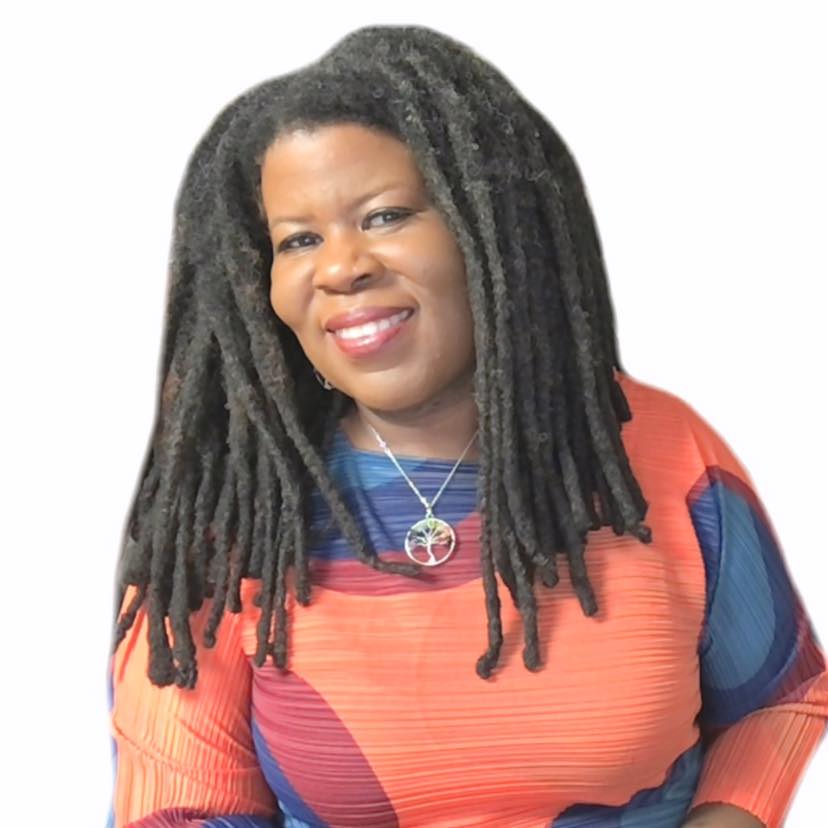
The Rev. Dr. Cheryl A. Lindsay, Minister for Worship and Theology (lindsayc@ucc.org), also serves a local church pastor, public theologian, and worship scholar-practitioner with a particular interest in the proclamation of the word in gathered communities. You’re invited to share your reflections on this text in the comments on our Facebook page: https://www.facebook.com/SermonSeeds.
A Bible study version of this reflection is at Weekly Seeds.