Sermon Seeds: A People That Produces Its Fruit
Sunday, October 4, 2026
Nineteenth Sunday after Pentecost| Year A
(Liturgical Color: Green)
Lectionary Citations
Exodus 20:1-4, 7-9, 12-20 and Psalm 19 • Isaiah 5:1-7 and Psalm 80:7-15 • Philippians 3:4b-14 • Matthew 21:33-46
https://lectionary.library.vanderbilt.edu/texts/?z=p&d=78&y=17134
Focus Scripture: Matthew 21:33-46
Focus Theme: A People That Produces Its Fruit
Series: Faithful and Vital (Click here for the series overview.)
Reflection
By Cheryl A. Lindsay
There’s billions of years of evolution behind each piece of fruit we harvest and enjoy. From the formation of the hot planet that later cooled and separated into seas and land masses, the development of plants and fruit is relatively recent in the last several hundred of millions of years. Fortunately, we can consider most of the trees and vines that produce fruit from a much more accessible timeframe. The care and nurture of vegetation normally measures through seasons of the year rather than the evolutionary stages of the earth.
In the same way, human beings entered the earthen mix even more recently than fruit. While the seven days of the first creation narrative may not align with a literal interpretation, the gist is true. Creation unfolded (and continues to unfold) in progressive steps and in ways that make the elements of creation mutually dependent upon each other. Fruitfulness has become synonymous with making positive contributions to life (in creation and in relationships). Is it surprising, then, that Jesus would refer to those receptive to the gospel and the messenger of the gospel as a people that produces its fruit?
This is the fifth narrative section in the Gospel of Matthew. It continues the themes of chapter 18 as it explores further what it is to be the new community under the reign of God. The outlines traced stand in stark contrast to ordinary practices. Chapter 19 explores what life as the “family of God” entails, considering family matters like marriage and divorce, children, and celibacy. The disciples continue to follow and they struggle to understand. They still get hung up on the dramatic reversals the reign of God ushers in, especially the parts about the first being last and the last first. Jesus explains and re-explains with many stories and parables along the way to Jerusalem. With chapter 21, Jesus and the disciples enter Jerusalem. Jesus enters with humility but arrives with authority. The conflict that has been smoldering between Jesus and the scribes, Pharisees, chief priests, and Sadducees erupts in Jerusalem. The conflict intensifies with the cleansing of the Temple. Jesus deftly defeats the challenges of his opponents as they try to trip him up with trick questions. He relates a number of stories with not so subtle unfavorable representations of the religious leadership.
Anna Case Winters
In this parable, Jesus points to himself and his identity. He tells the story of conflict met with violence. Like all metaphorical stories, the actions taken are representative. The violence Jesus presents as strictly physical in the story was not strictly physical in lived experiences. Mental, spiritual, relational, financial as well as physical violence make up the story of an oppressed people. The obvious represented characters of the story include the Holy One, prophets, people, John the Baptist, and Jesus at odds with the leadership, especially religious, of their respective time periods.
As with other parables, on the face of it they seem to be simple harmless stories. Each one of the next three has a father and a son among the characters. Those who have ears to hear, however, will know that the disobedient son, the evil tenants who kill the son, and the invited guests who do not come to the wedding banquet for the son all stand for the religious leaders. These three parables accuse them of hypocrisy and disobedience, rejecting/persecuting/executing God’s prophets, and not responding to God’s call. All the stories end in an “upset” and a judgment. Together the parables “inscribe a large historical arc from the biblical prophets and John the Baptist over Jesus and the community to the Day of Judgment.”
Anna Case Winters
The references become more particular as the parable unfolds. The warning to the religious leaders is clear and particular to them: if they cannot be trusted as leaders and caretakers of the Holy One’s vineyard, that role and responsibility will shift to a new set of leaders. The basis of evaluation is fruitfulness. This is the lesson of the parable.
The lesson is not that God will retract God’s favor, blessing, and purpose from the community of faith as a whole. That interpretive thread that suggests that God’s favor is transferable from one group to another rejects the expansiveness of the reign of God and the love of God for all God’s people. This story is about leadership and directed toward those who abuse their standing and authority as leaders…especially when they use violence as their primary tool.
There is a troubling (supersessionist) turn in some commentaries when they work out interpretations of these two parables. They take them to mean that the church now “supersedes” Israel in God’s work of salvation. In the parable of the two sons they associate the disobedient son with Israel and the obedient son with the church. In the second parable, they associate the evil tenants with Israel and the “other” (new) tenants with the church. Quite apart from the way in which such interpretations could promote supersessionism and its attendant abuses, this is a distortion of the plain meaning of the parables. Jesus’ “target” is the religious leaders, not Israel as such. It is unlikely that Matthew or his (predominantly Jewish) community would have promoted this idea, setting Jew against Gentile in their shared community of faith. Matthew maintains a privileged place for Israel in God’s salvation history while opening God’s blessing to all the nations. The inclusion of the nations was part of the traditional Jewish eschatological hope. There is much more reason to believe Matthew is associating Israel with the vineyard itself (as in Isa. 5:1–7). It is a change in the leaders that is needed; replacing the unfaithful with faithful leaders. The landowner in the parable seeks more obedient sons and better tenants for the care of his beloved vineyard. He does not go seeking a new vineyard.
Anna Case Winters
Early church records reinforce this as many followers of Jesus remained true to their Jewish heritage and religious practice. The two were not considered to be in conflict. At the same time, Jesus does not set out to establish a new religion, he comes to be present, to model a fruitful life, and to bring liberty to those in bondage. His life pattern and goal was solidarity, especially with the marginalized and oppressed. His mission was to build a movement to expand the kindom of God and usher in a new era leading to re-creation.
The evolution of the planet teaches us that every so often creation resets itself. Yet, in every mass extinction event, a remnant remains. The church appears to be in a period of reset as well. Just like the planet, the church remains resilient and a remnant will continue forward in a new way. This lesson from Jesus assures us that church will be a people that produces its fruit.
Reflection from Voices of People of African Descent
The 33rd General Synod adopted a Resolution to Recognize the United Nations International Decade for People of African Descent (2015-2024). As part of its implementation, Sermon and Weekly Seeds offers Reflection from Voices of People of African Descent related to the season or overall theme for additional consideration in sermon preparation and for individual and congregational study.
If My Blackness Turns to Fruit (Excerpt)
By E. Ethelbert Miller
Dear America, my love.
If my blackness turns to fruit
do not pull it from the vine;
let it grow from earth to sky
untouched by hateful hands.
So sweet, my juice, my jazz,
my blues, so sad but true.
Dear America, my love.
Read the entire poem here: https://www.poetryfoundation.org/poetrymagazine/poems/1731775/if-my-blackness-turns-to-fruit
For Further Reflection
“Children who grow what they eat will often eat what they grow” ― Melanie Charlene
“The rulers who sow the seeds of hatred in the land will die of poisoned fruit in the end.” ― Mwanandeke Kindembo
“The greater the fruit a trees bears, the greater the number of stones thrown at it.” ― Matshona Dhliwayo
Works Cited
Case Winters, Anna. Matthew (Belief: A Theological Commentary on the Bible). Louisville: Westminster John Knox Press, 2015.
Suggested Congregational Response to the Reflection
For the season after Pentecost, the themes are derived from the categories of the Marks for Faithful and Vital Churches. Each subseries will invite engagement with one Mark within the category. Each local church should choose how this will be incorporated. (This could be a sermon talk-back from the lens of the Mark, a direct discussion on the Mark, a prayer or song that relates to the Mark.) The response may also be a call to action embedded in the sermon or the sending inviting engagement beyond worship.
Mark for Congregational Response: Dismantling physical and cultural barriers that hinder accessibility or inhibit connection or relationship with the Local Church and community.
Worship Ways Liturgical Resources
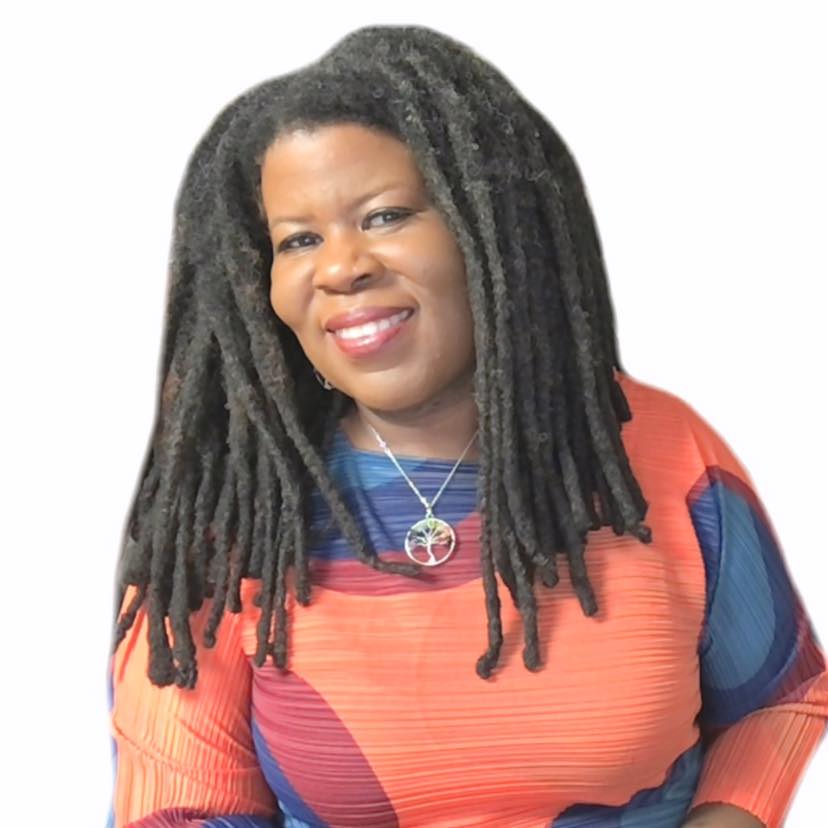
The Rev. Dr. Cheryl A. Lindsay, Minister for Worship and Theology (lindsayc@ucc.org), also serves a local church pastor, public theologian, and worship scholar-practitioner with a particular interest in the proclamation of the word in gathered communities. You’re invited to share your reflections on this text in the comments on our Facebook page: https://www.facebook.com/SermonSeeds.
A Bible study version of this reflection is at Weekly Seeds.