Sermon Seed: Position Yourself
Sunday, November 15, 2026
Twenty-Fifth Sunday after Pentecost | Year A
(Liturgical Color: Green)
Lectionary Citations
Judges 4:1-7 and Psalm 123 • Zephaniah 1:7, 12-18 and Psalm 90:1-8, (9-11), 12 • 1 Thessalonians 5:1-11 • Matthew 25:14-30
https://lectionary.library.vanderbilt.edu/texts/?z=p&d=85&y=17134
Focus Scripture: Judges 4:1-7
Focus Theme: Position Yourself
Series: Faithful and Vital (Click here for the series overview.)
Reflection
By Cheryl A. Lindsay
I live in a state that elects judges, yet those are the most likely positions on the ballot for people to skip. Sometimes, voters rely upon name recognition, and we have a history of certain names serving in the judicial branch based on name alone. Others do their due diligence and research the various resources that evaluate candidates based on experience, judicial temperament, and interviews. Recently, the state has identified judges by political party affiliation, which has changed the tenor of those races as well as their outcomes.
Last month, I served on a voter information panel. I presented on voter rights, while others on the panel covered the three branches of government on the local ballot and their impact on citizen’s daily lives. The judicial expert was a widely-respected local judge who made the point that judges have power that no other office holder has: to render judgement on property, freedom (through incarceration), and life itself (in a state that still has the death penalty). This is not the office to ignore on the ballot, he emphasized.
The judges found during the historical period following the death of Joshua and before the elevation of kings did not campaign for office in a democratic process.
The book of Judges derives its English title from the Latin Liber Judicum which itself rests upon the lxx Kritai (‘judges’). The Hebrew title is šôpĕṭîm. The English title is apt to be misleading, since it conveys the idea of a group of men whose principal task was in the legal sphere, arbitrating in disputes between men. A cursory reading of Judges will show that this was, in fact, a subsidiary function of its leading characters. The clue to the connotation of the Hebrew may be found in 2:16, ‘And the Lord raised up judges, which saved them out of the hand of those that spoiled them’ (rv). The judges were primarily the ‘saviours’ or ‘deliverers’ of their people from their enemies. Nowhere in the book is the noun šôpēṭ used directly of an individual, but the associated verbal form is found in connection with Othniel (3:10), Deborah (4:4), Tola (10:2), Jair (10:3), Jephthah (12:7), Ibzan (12:8, 9), Elon (12:11), Abdon (12:13, 14) and Samson (15:20; 16:31). In 11:27, in the context of the Ammonite oppression, the Lord is described as a šôpēṭ. This conception may be said to form the background of the book: the Lord is the real Judge of his people; it is he who gives them into the hands of their oppressors; it is he who raises up deliverers for them; it is his Spirit, coming upon men, which equips them for their tasks (3:10; 6:34; 11:29; 14:6, 19; 15:14).
Arthur E. Cundall and Leon Morris
The focus passage begins in judgement: the people have done evil before God. Oppression dwells in evil, and the people cry out for mercy after two decades of it. At that time, Deborah enjoys her term as judge, which requires her at times to act as prophet and at times to act as general. As a prophet, she speaks on behalf of God to the powerful and those that God would empower. She responds, as an intermediary, to the pleas of the people for help in the time of trouble, futility, and despair. Deborah maintained a consistent location in order to be accessible. The people knew where she could be found for guidance, correction, and leadership.
Later, Deborah will marshall an army, but first the people need to hear from the Holy One through the words of the prophet.
There are a number of remarkable aspects to the dually presented story of Deborah. The narrative version in Judges 4 helps to fill some of the gaps left in the “song” in Judges 5, which concentrates more on the theme of blessings and curses (Butler, 133). The most obvious point is that Deborah is the only female judge (“a mother in Israel,” 5:7), the only figure in the book to be given the label of “prophetess,” and the only person to actually participate in legal mediation (4:4–5). Her role as prophet places her in company with Moses’ sister Miriam (Exod. 15:20) and Huldah in Josiah’s time (2 Kgs. 22:14). As an arbitrator of the law, Deborah, unlike Samuel who worked a circuit of sites (1 Sam. 7:16–17), has a recognized location in the Ephraimite hill country beneath a palm tree where the people come for justice. From her seat of authority, Deborah summons the Naphtali war chief Barak and exercises her prophetic office to call on him in God’s name to lead his men against the Canaanite general Sisera at Mount Tabor (4:6–7; cf. Samuel in 1 Sam. 15:1–3).
Victor H. Matthews
When considering this text, the details of the instruction can overshadow the opening and concluding lines of her pronouncement. This instruction does not come from Deborah, it comes through her. This is the Holy One’s plan for deliverance of the people. Just as she has positioned herself in a place to be of service in God’s realm, she informs Barak that the Holy One has a place determined for him. Most importantly, victory will not belong to him or his army, it will be attributable only to the Holy One whose reign extends even to their enemies. God’s power is sufficient to prepare the way and to accomplish the work. Despite their evil ways, God will deliver them.
The book of Judges shows that the misfortunes and successes of Israel are correlated to periods characterized, respectively, by Israel’s unfaithfulness and by God’s gracious interventions. More specifically, periods of prosperity, as in the time of Joshua (2:7), are correlated to faithfulness to God and the covenant. By contrast, periods of misfortune (when Israel is confronted or oppressed by other peoples) are interpreted as resulting from not obeying God’s covenantal commandments (2:2). In this way, the book of Judges calls us to reintegrate in today’s theology a quest for the meaning of history, seeking to discern the significance of each event from the perspective of the covenant with God. This lesson is illustrated by the way the book of Judges interprets the significance of the presence of other peoples in the promised land: “They were for the testing of Israel, to know whether Israel would obey the commandments of the LORD, which commanded their ancestors by Moses” (3:4). In this time of transition between Joshua (2:7) and the monarchy (“in those days there was no king in Israel”), Israel is on a quest for a sense of identity and a correlated sense of morality.
Fidèle Ugira Kwasi
The lesson of Judges is not that God will make everything work for us despite our faithlessness. The encouragement of the prophet is to position yourself in alignment with God’s plan and trust God through the process and with the outcome. The battles found here are instrumental and secondary to the demonstration of a faithful God to a people the Holy One continues to graciously pursue. Let us get in position to be faithful.
Reflection from Voices of People of African Descent
The 33rd General Synod adopted a Resolution to Recognize the United Nations International Decade for People of African Descent (2015-2024). As part of its implementation, Sermon and Weekly Seeds offers Reflection from Voices of People of African Descent related to the season or overall theme for additional consideration in sermon preparation and for individual and congregational study.
“I Dream A World” by Langston Hughes
I dream a world where man
No other man will scorn,
Where love will bless the earth
And peace its paths adorn
I dream a world where all
Will know sweet freedom’s way,
Where greed no longer saps the soul
Nor avarice blights our day.
A world I dream where black or white,
Whatever race you be,
Will share the bounties of the earth
And every man is free,
Where wretchedness will hang its head
And joy, like a pearl,
Attends the needs of all mankind-
Of such I dream, my world!
For Further Reflection
“Authentic Leadership goes beyond positions. It is about the proper use of power, even when dealing with the powerless.” ― Gift Gugu Mona
“Part of the role of the writer, I believe, is to take dangerous positions on behalf of those whose voices are not so easily heard.” ― Teju Cole
“Man is the result of slow growth; that is why he occupies the position he does in animal life. What does a pup amount to that has gained its growth in a few days or weeks, beside a man who only attains it in as many years.” ― Alexander Graham Bell
Works Cited
Cundall , Arthur E. and Leon Morris. Judges and Ruth: An Introduction and Commentary, vol. 7, Tyndale Old Testament Commentaries. Downers Grove, IL: InterVarsity Press, 1968.
Kwasi, Fidèle Ugira . “Judges.” Patte, Daniel, Ed et al. Global Bible Commentary. Nashville: Abington Press, 2004.
Matthews, Victor H. Matthews. Gale A. Yee, Ed. Fortress Commentary on the Bible: Two Volume Set. Minneapolis: Fortress Press, 2014.
Suggested Congregational Response to the Reflection
For the season after Pentecost, the themes are derived from the categories of the Marks for Faithful and Vital Churches. Each subseries will invite engagement with one Mark within the category. Each local church should choose how this will be incorporated. (This could be a sermon talk-back from the lens of the Mark, a direct discussion on the Mark, a prayer or song that relates to the Mark.) The response may also be a call to action embedded in the sermon or the sending inviting engagement beyond worship.
Mark for Congregational Response: Engaging with the various settings of the United Church of Christ, including other Local Churches, as well as the Association, Conference, General Synod, and global ministry partners.
Worship Ways Liturgical Resources
https://www.ucc.org/worship-way/after-pentecost-25a-november-15/
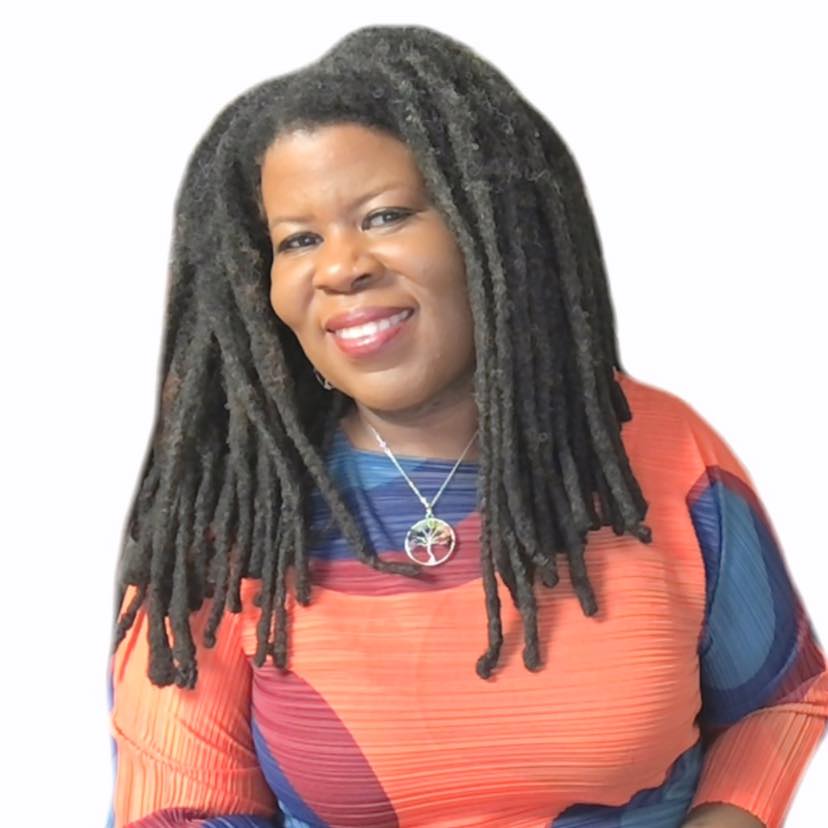
The Rev. Dr. Cheryl A. Lindsay, Minister for Worship and Theology (lindsayc@ucc.org), also serves a local church pastor, public theologian, and worship scholar-practitioner with a particular interest in the proclamation of the word in gathered communities. You’re invited to share your reflections on this text in the comments on our Facebook page: https://www.facebook.com/SermonSeeds.
A Bible study version of this reflection is at Weekly Seeds.