From the pulpit to the emergency room: Frederick faith leaders are using their churches to help erase millions of dollars in medical debt in their community
When the Rev. Chance Martinez-Colon learned of the burgeoning medical debt among Frederick County residents, he was determined not to sit idly by and allow it to fester. He wanted to raise funds to eliminate that debt for Maryland families and individuals — a goal he know could not be done alone.
“Realizing the need was so great, I reached out to other churches to find out who would be on board with joining this [effort],” said Martinez-Colon.
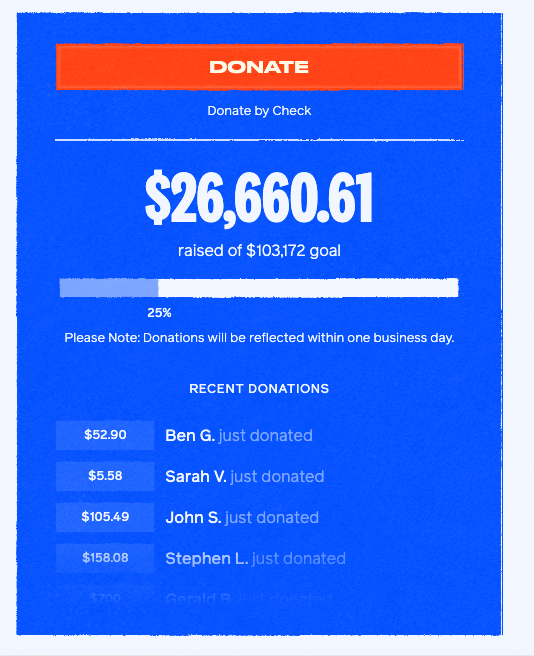
That effort would prove to be successful, as Martinez-Colon who is the pastor of Grace United Church of Christ in Frederick, Maryland, and several of his colleagues from other faith traditions joined forces to raise funds to help eliminate medical debt in the county. They hope to eliminate $15 million worth of medical debt by raising $103,000.
The burden of medical debt on families and individuals in the United States continues to be a heavy weight to carry. According to the Peterson-KFF Health System Tracker, approximately 41 percent of American adults carry some form of medical or dental debt. This translates to roughly 100 million people in the United States carrying this debt, as the American healthcare system pushes patients into debt on a mass scale.
A multi-faith effort
Six faith leaders from across the Frederick County area had already formed what they call a “multi-faith coalition,” pulling together resources to work toward a common good when discussions around medical debt began.
“I’m the kind of person that only has to hear things once before I really take it and run with it,” said Martinez-Colon.
The group, which features the Revs. Beth Hutton, pastor of Calvary UMC, and Catherine Thompson, Rector of All Saints Episcopal Church began its work of determining how it can best raise the funds to help erase debts for residents. They found Undue Medical Debt, a national 501(c)(3) that buys and erases qualifying personal medical debt.
“The life of clergy is very lonely, sometimes,” said Hutton, who added that having this clergy group support is beneficial and comes from each of them seeking support in their own, individual ways.
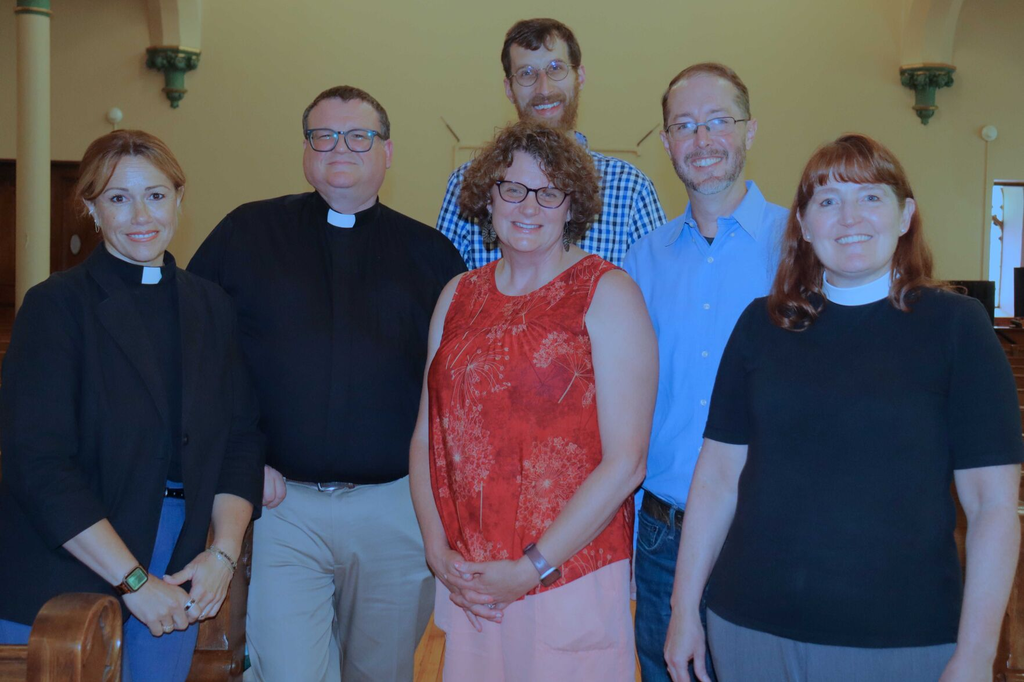
In addition to Martinez-Colon, Hutton, and Thompson, the Downtown Frederick group also includes the Rev. Carl Gregg, pastor of the Unitarian Universalist Congregation of Frederick, and the Rev. Josh Privitt, senior pastor of Evangelical and Reformed UCC.
‘Caring for our fellow neighbors’
Relieving people of medical debt is an issue that is very personal to each of the pastors, as members of their respective congregations have faced their own challenges with navigating mounting medical debt.
For Martinez-Colon, he has a history of hearing and sharing stories of how crushing this burden can be. Before becoming a pastor, he was a medical social worker, who worked in emergency rooms
“I saw firsthand people coming to the emergency rooms for primary care. They couldn’t go to a doctor because payment is due when services are rendered,” said Martinez-Colon.
These visits can also put patients in deeper debt. Pastors, like Hutton, are also finding themselves walking with congregants in navigating how to understand their debt, as the process can be overwhelming and tricky, especially for senior citizens.
“I’m always thinking about people who are not able to navigate those conversations with billing departments and asking for reviews. They just give up and find themselves in debt,” said Hutton, who has a 24-year-old son with autism, and has to navigate his medical concerns as he’s unable.
Hearing the stories and having personal experiences with the challenges of medical debt up close made the choice to raise funds easy for the clergy.
‘Medical care is a human need’
Hutton, along with her colleagues noted that having access to healthcare to meet the basic and complex needs of residents is not only a need, but a right.
“If you look at the ministry of Jesus, alone, and the way that he cared for people who were ill, it is very much a part of who we are as Christians to fulfill that call to ministry,” said Hutton. “Medical care is a human need.”
The idea of healthcare as a fundamental human right was first recognized by the World Health Organization in its 1946 Constitution. More than 70 countries, including nearly all of Europe, Canada, Australia, Japan, and parts of South America and Asia, provide universal healthcare to their residents. In the United States, however, where politics and money spar with what is just, universal healthcare is non-existent.
“We are afraid to bring awareness because we’re afraid that we will be too political,” said Martinez-Colon. “I often think our silence is also political, and if we can do something to alleviate the suffering of our neighbors, I feel like we are called to do that.”
The campaign, running in conjunction with Undue Medical Debt, runs through October 31. Learn more and give HERE.
Content on ucc.org is copyrighted by the National Setting of the United Church of Christ and may be only shared according to the guidelines outlined here.
Related News
National Ministries, along with Central Pacific Conference release joint statement condemning school shooting in Bend, Oregon
The United Church of Christ, in collaboration with the Central Pacific Conference, has...
Read More
‘No death should be fodder for public entertainment’ – Rev. Karen Georgia Thompson issues statement on the initial intention of the live broadcast of the execution of Nidal Malik Hasan
The United Church of Christ’s General Minister and President/CEO, the Rev. Karen Georgia...
Read More
We Are Not Alone
A Tent of Our own Making is a series of gatherings in the United Church of Christ where...
Read More