Sermon Seeds: We Will Serve
Sunday, November 8, 2026
Twenty-Fourth Sunday after Pentecost | Year A
(Liturgical Color: Green)
Lectionary Citations
Joshua 24:1-3a, 14-25 and Psalm 78:1-7 •Wisdom of Solomon 6:12-16 or Amos 5:18-24 and Wisdom of Solomon 6:17-20 or Psalm 70 •1 Thessalonians 4:13-18 •Matthew 25:1-13
https://lectionary.library.vanderbilt.edu/texts/?z=p&d=84&y=17134
Focus Scripture: Joshua 3:7-17
Focus Theme: We Will Serve
Series: Faithful and Vital (Click here for the series overview.)
Reflection
By Cheryl A. Lindsay
Service assumes different forms. Often, the term translates into performing acts for the benefit of someone else. Community service that delivers meals or distributes clothing to those in need. Service can also mean holding an elected or appointed position in an organization, government, or church. We may serve someone food during dinner. We may also get our vehicle serviced. We also may subscribe to streaming services or think of utilities as services in which we engage. When we gather together in worship, that time is often referred to as a worship service.
So, what does service really mean? Participation in the military is also called service. To receive legal paperwork is to be served. Even a set of dishes and silverware can be referred to as a service. The term clearly has many definitions, can be used as a person, place, thing, or action. The commonality seems to be a relational nature. Service does not happen in isolation. Many of the definitions relate to hospitality and acts performed for another and the tools that assist in execution. Other understandings relate to work done for someone else or performed by someone else for us. Still, service may assume multiple meanings and significance.
In the focus text, the lead character of Joshua first became known for his service to his predecessor, Moses, in the Exodus journey.
Biblical tradition associates the figure of Joshua closely with Israel’s conquest of the land of promise. In the wilderness period Joshua serves as the assistant of Moses. After the death of Moses he leads Israel in a successful conquest of Canaan and then apportions the subjugated land among the tribes (see Tribes of Israel and Land Allotments/Borders). Even though Joshua remains obscure as a historical figure, the Historical Books emphasize his theological and national importance by presenting him in a wide variety of significant roles.
R. D. Nelson
Those roles included being a companion and help to Moses. As one of Moses’ closest associates, especially after Aaron’s role diminished and eventually ended with his death, Joshua was known for remaining by the Tent of Meeting whether Moses entered when the cloud announcing the Holy One’s presence descended or the times in-between. Joshua served on perpetual watch, presence, and witness with the expectation that the Holy One would return. As Moses becomes frail in his later years, Joshua, among other younger leaders, would prop him up literally and figuratively so that Moses’ leadership among the people could continue until his death.Joshua was also a warrior and general of sorts, even in the Exodus narrative, leading the victory against the Amalekites. At the same time, he served as a spy obtaining intelligence about the tribal nations the Israelites would encounter in the wilderness.
Joshua becomes the heir apparent to Moses with a divine, but limited appointment. His leadership will not be the same as Moses. He will not receive the same authority and will have a different circle of leadership and accountability. Notably, his assignment and the circumstances of the community have changed. Joshua is the leader who leads the Israelites into the promised land. His generation did not know captivity in Egypt for themselves; they are the first to be born free. Yet, they entered a community immersed in struggle, transitions, and uncertainty. They had a destination, but the journey was long, frustrating, and challenging to body, mind, and spirit.
Once they reach the promised land, the people discover that it is already occupied, and Joshua the military man takes precedence. While he continues the tradition of leading prophetically, military exploits consume most of his tenure of leadership.
Chapter 24 occurs within the context of a leader concluding his ministry. This is the end of his life and service, and it contrasts with Moses. Both persons devoted their lives to God’s purposes for them. Each led the people through the particular stage in their development as a people. Moses, at the end of his ministry, seems to forget his strength and authority came from the Holy One and not himself and his staff. Joshua, by contrast, has no temporary lapse in discernment and faithfulness. Moses’ final act presents the scene of the storied leader looking over into a land he will never enter. Joshua concludes his ministry conducting a covenant ceremony with the people he has lead that centers on remembering and recommitting to the God that he and they serve.
Joshua 24:25 designates this chapter as a covenant-making ceremony. Scholars have identified a similar form between biblical covenants and Ancient Near Eastern treaty texts, especially those from before 1200 BC preserved by the Hittites. The following items are found in Hittite vassal treaty texts and in biblical covenants from the Pentateuch and Joshua: introduction, historical prologue, set of stipulations, deposit in the temple and public reading, list of divine witnesses, and curses for disobedience and blessings for obedience. Kitchen’s structural identification of Joshua 24 with the Hittite treaty texts will serve as a useful outline of the text. He finds here ‘a abbreviated account’. There is an introduction (v. 2b), a historical prologue (vv. 2c–13), a set of stipulations (vv. 14–24), a deposit of the text (v. 26) and a witness (vv. 26–27). The curses and blessings are implicit in verse 20. i. A new assembly at Shechem (24:1). The list of leaders that Joshua summons corresponds to the list in 23:2 and connects the two chapters. The address of chapter 23 did not end Joshua’s relationship with Israel. Something had to be done in order to make concrete the vision that Joshua had for the people he had served. Joshua 24 relates the ratification of God’s covenant. As in a treaty ceremony, the whole nation (or its legal representatives) gather before their Lord to make the agreement. As in Joshua 8:30–35, Shechem is the place of covenant-making. That the people presented themselves before God implies two things: (1) God was going to make a covenant with them; and (2) it was a time of transition in the leadership. Once before in the Bible does the verb presented themselves and the name of God appear as here.26 In Exodus 19:17, the people presented themselves before God in order to hear the covenant, to agree to it and to ratify it in a covenant ceremony. The same events will take place here. This special verb also occurs in Deuteronomy 31:14 where Moses and Joshua appear before God and Joshua is commissioned to lead the people after Moses’ imminent death. In Joshua 24, Joshua will die and his ‘successor’ will be the representatives of the people (v. 31).
Richard S. Hess
At the pronouncement of most covenants in the biblical witness, the Holy One offers them as gifts of God’s faithful love and abiding presence. The recipients are only asked to bear witness. There were no conditions attached to God’s promise to Noah not to destroy creation. God gave the covenant and its symbol the rainbow, as a gift. When God made the covenant with Abraham and Sarah as well as the covenant with Hagar, God placed all the terms on Godself. This reality held true even as it was renewed with the matriarch and patriarch descendants. The pattern remained consistent: God gave and the people received.
Joshua adds another level. Perhaps because he witnessed Moses failing and feared that his successors will repeat it, Joshua conducts a re-commitment ceremony. The covenant has been in effect, and this group of people enjoy the fulfillment of one of its promises. In their new life, that will continue without his leadership, he shares the legacy of his fruitful ministry: in all his service, Joshua has considered it all rendered unto God. Who will they serve, he asked? Who will we?
For Further Reflection
“Coming from a place of humility instead of entitlement, and recognizing that you are blessed enough to get the chance to do something, can change everything.” ― Jeanette Coron
“The cure to every disaster is humanity in the world.” ― Neymat Khan
“There is a level of fulfilment that comes with serving God with sheer excellence, even when facing the mountains of this world.” ― Gift Gugu Mona
Works Cited
Hess, Richard S. Joshua. Downers Grove: InterVarsity Press, 1996.
Nelson, R. D. “Joshua.” Ed. Bill T. Arnold and H. G. M. Williamson. Dictionary of the Old Testament: Historical Books.(Downers Grove, IL: InterVarsity Press, 2005
Suggested Congregational Response to the Reflection
For the season after Pentecost, the themes are derived from the categories of the Marks for Faithful and Vital Churches. Each subseries will invite engagement with one Mark within the category. Each local church should choose how this will be incorporated. (This could be a sermon talk-back from the lens of the Mark, a direct discussion on the Mark, a prayer or song that relates to the Mark.) The response may also be a call to action embedded in the sermon or the sending inviting engagement beyond worship.
Mark for Congregational Response: Engaging with the various settings of the United Church of Christ, including other Local Churches, as well as the Association, Conference, General Synod, and global ministry partners.
Worship Ways Liturgical Resources
https://www.ucc.org/worship-way/after-pentecost-24a-november-8/
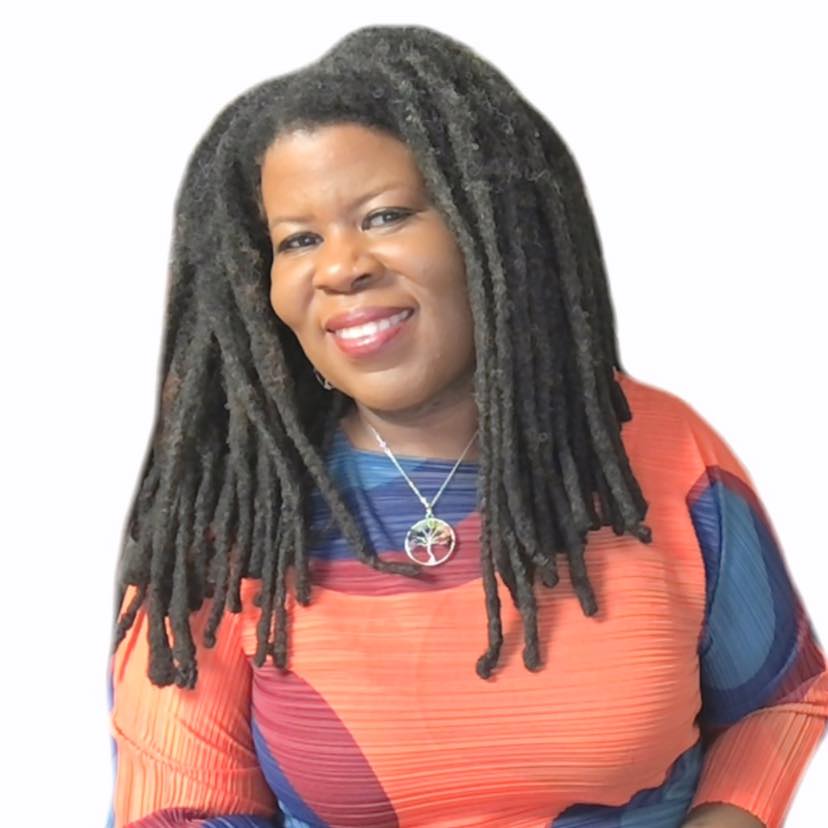
The Rev. Dr. Cheryl A. Lindsay, Minister for Worship and Theology (lindsayc@ucc.org), also serves a local church pastor, public theologian, and worship scholar-practitioner with a particular interest in the proclamation of the word in gathered communities. You’re invited to share your reflections on this text in the comments on our Facebook page: https://www.facebook.com/SermonSeeds.
A Bible study version of this reflection is at Weekly Seeds.