Sermon Seeds: Who Are These
Sunday, November 1, 2026
All Saints Day | Year A
(Liturgical Color: Green)
Lectionary Citations
All Saints Day
Revelation 7:9-17 and Psalm 34:1-10, 22 •1 John 3:1-3 •Matthew 5:1-12
https://lectionary.library.vanderbilt.edu/texts/?z=p&d=83&y=17134
Twenty-Third Sunday after Pentecost
Joshua 3:7-17 and Psalm 107:1-7, 33-37 •Micah 3:5-12 and Psalm 43 •1 Thessalonians 2:9-13 •Matthew 23:1-12
https://lectionary.library.vanderbilt.edu/texts/?z=p&d=82&y=17134
Focus Scripture: Revelation 7:9-17
Focus Theme: Who Are These
Series: Faithful and Vital (Click here for the series overview.)
Reflection
By Cheryl A. Lindsay
Circumstances change. There’s an expression that reflects this hopefully in the midst of despair: “Trouble don’t last always.” Sometimes, people are mislabeled as change-adverse, when in fact, they are more accurately described as risk-adverse. They like how things are and do not perceive a benefit in uprooting what works for them. Those same individuals actively seek change when their circumstances become tenuous. A lot of people limit their hopes to just a bit of stability so that they can live in peace, whether that comes from a place of prosperity or from a place of resilience where the oppressed have learned to work the rules of empire to feel somewhat safe in a predictable, if not liberated life.
There are periods in history that are marked by long stretches of relative peace and stability until that circumstance changes. A closer look at those time periods may reveal that what was peaceful for some came with a cost that other peoples were forced to pay. Even still, those periods get punctuated with shifts and transitions that threaten even manufactured peace and oppressive prosperity. In those conditions, revolutions have enacted regime change. Opportunistic agents have moved to wreck nations with military action from the outside and manipulation and subterfuge from within. These time periods generate uncertainty and discontinuity that often presents as a void in leadership, ethical norms, and belief systems that beg to be filled.
Dominance may be valued not because it offers a better future but it promises certainty. Aggression is embraced as a plan even if the details work against the very people who suffer under the new regime. A tactic of those who profit from the oppression of others is to keep the disparate groups separated and focused singularly on their unique struggle rather than to connect the root causes and common sources of their marginalization and pain.
Historically, empires came into being by conquering a succession of more vulnerable nation states and/or another empire whose lifecycle reached its end. The Roman Empire took centuries to reach its dominant position in the Mediterranean world. After securing itself as a regional power, it expanded into territories controlled by Macedonian and Greek rule. As it spread and conquered, it absorbed the resources and people of those it vanquished. Undeniably, those victories killed countless and caused immeasurable damage to the landscape of those lands. Rome, even as victor, would have experienced loss of life and other collateral damage. No one escapes harm when wars are waged.
This is the era in which Jesus enters the human condition. And, at the time of his ascension, the economic and military power of Rome had not abated. But, Jesus did not come to conquer the world through war. Jesus brought love as the means, tool, and goal of his victory campaign.
Writing at the height of imperial prosperity in Asia Minor, John proclaims the message of hope that Rome’s unjust reign would last only a little while longer, and that Rome had already been defeated by the nonviolent victory of Jesus the Lamb. Unlike other ancient apocalypses, John’s message is not a secret to be sealed up until the end (in contrast to the apocalyptic book of Daniel; see Dan 12:4). Rather, as a public prophetic letter, Revelation is to be “read aloud” in the communities to which it is addressed (Rev. 1:3).
Barbara R. Rossing
Revelation is a prophetic book. As a prophet, John the Revelator (not to be confused with the Gospel writer), speaks truth to power and offers encouragement to those living under the oppressive rule of corrupt leaders. This period of trouble they experience will not persist or prevail in light of the greater power of the Liberating God.
No single interpretive strategy can encompass the richness of Revelation. Rhetorical readings of Revelation that investigate its persuasive power in its original first-century context may provide the most promising criteria for interpretive communities adjudicating competing readings today. Seeking analogies to John’s rhetorical situation can bring certain readings to the fore while problematizing others. I especially encourage reading from the perspective of marginalized people, and with communities and movements who have found in this book a profound message of hope—including ecological hope for our life together on this earth. John’s emphasis that God is the one who creates the world—and who will not leave the world behind—makes a hermeneutics of hope appropriate for reading the book today.
Barbara R. Rossing
That hope is embodied in a series of visions given to John while living in exile. Notably, Revelation 7 encapsulates that vision in the context of worship. Yet, this is not a gathering of the house and tenement churches of the first century. Nor was this an assembly of the churches in a particular community. This vision of worship presented the world unified across difference and distinction in worship so compelling that the angels around the heavenly throne would join them.
The second vision (7:9–16) portrays the multiethnic multitude standing before the throne of God. Variations of the phrase “from every nation, from all tribes and peoples and tongues” (Rev. 7:9) occur seven times in Revelation (5:9; 7:9; 10:11; 11:9; 13:7; 14:6–7; 17:15; González 1999), underscoring the multiethnic character of God’s people. The white-robed multitude sings songs and waves palm branches. “Salvation,” “blessing,” “glory,” and “power” were imperial terms common in Roman propaganda, used in the songs here to make counterimperial claims for God alone. Palm branches in the hands of these worshipers allude to the Feast of Tabernacles, one of Revelation’s many exodus links (Lev. 23:40–43). For Revelation, a dramatic new exodus is being undertaken “not in Egypt but in the heart of the Roman Empire” (Richard 1995, 77).
Barbara R. Rossing
The diversity in this vision reflects the diversity of the Roman Empire. The vision is particular and contextual not a fanciful or fantastical unattainable fiction. The prophetic roots itself in real lives, particular circumstances, and God’s disposition toward them. This vision presents the promise of liberation of all the nations, tribes, peoples, and tongues subjugated under imperial rule. The heavenly realm participates, not as a distant and hoped-for destination, but as a worship partner and co-conspirator to the multitude envisioning a just, new earth that is possible and engaging in the coming kindom through worship.
The multitude is strikingly multicultural, from many tribes and nations. Cuban scholar Justo González compares the multicultural perspective of Revelation to mestizo literature, addressed to people of a mixed cultural heritage. John may have been a recent refugee to Asia Minor from Palestine following the trauma of the Roman-Jewish War. For González, John’s dual identity as a Jew writing to Greek-speaking people in Asia Minor, in a land and language not his own, places him in a situation similar to those of people with hybrid identities today (González 1999, 59).
Barbara R. Rossing
In an earlier biblical narrative, a homogenous people come together to reach the heavens by building a tower. They sought, through their collective might and ingenuity, to be on par with the Holy One. In response, God diversifies them, erects the barrier of language among them, and humbles them in their grand pursuit. The bookend to that story might be considered the Day of Pentecost when, through Spirit, language no longer causes a barrier to communication and community. In the Revelation narrative, Pentecost continues and presents the vision of earth as in heaven. That vision rests, seemingly, on a people who when asked, who are these, embrace God’s expansive, affirming, and loving view that “these” are all of us.
Reflection from Voices of People of African Descent
The 33rd General Synod adopted a Resolution to Recognize the United Nations International Decade for People of African Descent (2015-2024). As part of its implementation, Sermon and Weekly Seeds offers Reflection from Voices of People of African Descent related to the season or overall theme for additional consideration in sermon preparation and for individual and congregational study.
Excerpt from “Praise Song for the Day” by Elizabeth Alexander
Someone is stitching up a hem, darning
a hole in a uniform, patching a tire,
repairing the things in need of repair.
Someone is trying to make music somewhere,
with a pair of wooden spoons on an oil drum,
with cello, boom box, harmonica, voice.
For the entire poem, click here: https://www.poetryfoundation.org/poems/52141/praise-song-for-the-day
For Further Reflection
“The happiest man is he who learns from nature the lesson of worship” ― Ralph Waldo Emerson
“You never go away from us, yet we have difficulty in returning to You. Come, Lord, stir us up and call us back. Kindle and seize us. Be our fire and our sweetness. Let us love. Let us run.” ― St. Augustine of Hippo
“There is an ancient tribal proverb I once heard in India. It says that before we can see properly we must first shed our tears to clear the way.” ― Libba Bray
Works Cited
Rossing, Barbara R. “Revelation.” Gale A. Yee, Ed. Fortress Commentary on the Bible: Two Volume Set. Minneapolis: Fortress Press, 2014.
Suggested Congregational Response to the Reflection
For the season after Pentecost, the themes are derived from the categories of the Marks for Faithful and Vital Churches. Each subseries will invite engagement with one Mark within the category. Each local church should choose how this will be incorporated. (This could be a sermon talk-back from the lens of the Mark, a direct discussion on the Mark, a prayer or song that relates to the Mark.) The response may also be a call to action embedded in the sermon or the sending inviting engagement beyond worship.
Mark for Congregational Response: Engaging with the various settings of the United Church of Christ, including other Local Churches, as well as the Association, Conference, General Synod, and global ministry partners.
Worship Ways Liturgical Resources
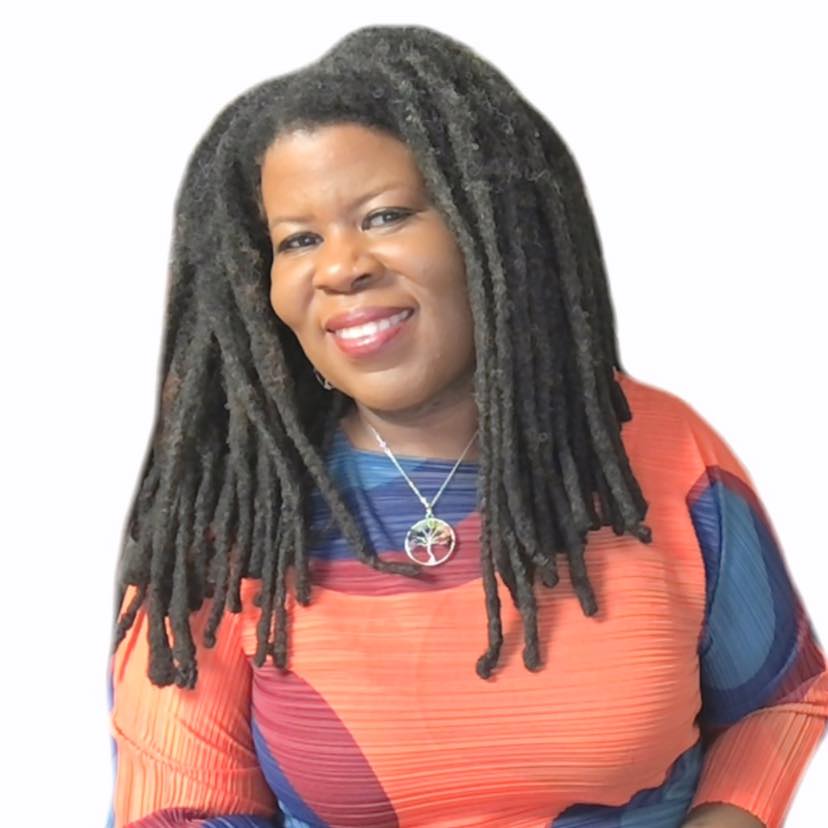
The Rev. Dr. Cheryl A. Lindsay, Minister for Worship and Theology (lindsayc@ucc.org), also serves a local church pastor, public theologian, and worship scholar-practitioner with a particular interest in the proclamation of the word in gathered communities. You’re invited to share your reflections on this text in the comments on our Facebook page: https://www.facebook.com/SermonSeeds.
A Bible study version of this reflection is at Weekly Seeds.