Sermon Seeds: Love God and Neighbor
Sunday, October 25, 2026
Twenty–Second Sunday after Pentecost| Year A
(Liturgical Color: Green)
Lectionary Citations
Deuteronomy 34:1-12 and Psalm 90:1-6, 13-17 •Leviticus 19:1-2, 15-18 and Psalm 1 •1 Thessalonians 2:1-8 •Matthew 22:34-46
https://lectionary.library.vanderbilt.edu/texts/?z=p&d=81&y=17134
Focus Scripture: Matthew 22:34-46
Focus Theme: Love God and Neighbor
Series: Faithful and Vital (Click here for the series overview.)
Reflection
By Cheryl A. Lindsay
Some people ask questions to begin a conversation. Others raise a question to understand an issue they face or solve a problem. Curious people ask questions because they enjoy discovering, learning, and exploring new things. Some questions assess our knowledge or evaluate our skills. These questions form tests. They may enable us to operate a motor vehicle or certify us to practice a trade. Others may make us eligible for a prize. Tests may take many forms, serve different purposes, and be administered under varied motivations.
In his encounter with the religious leaders, they ask Jesus questions. Some are curious and open to hear and reflect upon his responses. Others use inquisitive dialogue as a test, not to evaluate him, but to expose him. Those religious leaders lack curiosity, sincerity, or discernment. They have already judged him. For them, Jesus could never be allowed to pass their tests. They keep asking him questions waiting for him to fail or to open the door to doubt. Nothing frustrates them more than Jesus responding with wisdom, clarity, and truth to their questioning. That frustration finally breaks open at the conclusion of the focus scripture.
It does not start that way.
The Pharisees, upon hearing how he had “silenced the Sadducees” (v. 34), are back at him. They send in a lawyer who asks Jesus to select one of the commandments in the law and declare it the “most important.” Latter rabbinic tradition counted 613 laws, all of which were to be respected and obeyed equally, though they recognized that some were “weightier than others.” Jesus’ answer refuses to choose only one law and instead goes to the heart and center of the law as such.“‘You shall love the Lord your God with all your heart, and with all your soul, and with all your mind.’This is the greatest and first commandment.And a second is like it: ‘You shall love your neighbor as yourself.’On these two commandments hang all the law and the prophets’” (vv. 37–40). Jesus has spoken what is most central to their shared tradition. He quotes Deuteronomy 6:5 and Leviticus 19:18. Jesus is not innovating here; these are fundamentals he would have learned at his mother’s knee. What he says is something the Pharisees should already know; they are put to shame.
Anna Case Winters
In another gospel account, the religious leaders he encounters follow up his declaration of the greatest commandment with the question of who is their neighbor. In other words, they want to know who they are required to love. It’s a reductive and restrictive framework for love, and Jesus responds with the Parable of the Good Samaritan. That gospel focuses on the marginalized and oppressed as centered and central in the realm of God. In Matthew’s account, the focus is more on the fulfillment of the Messianic promise. Both themes are present in both gospels, but Matthean attention and intention toward incorporating tradition into the Jesus movement offers a different lens for this exchange.
Jesus asks them a question that points toward tradition.
Before they can also walk away, Jesus turns the tables and asks them a question, “What do you think of the Messiah? Whose son is he?” The Pharisees give the expected answer, “The son of David” (v. 42). This is the title that the children bestowed on Jesus in the previous chapter—to the dismay of the chief priests (21:15–16). The crowds and many petitioners for healing have also addressed him with it. Jesus quotes a Psalm where the Messiah is addressed as David’s “Lord.” How then can he be only a “son of David?” The reader knows that the Messiah is more than that; Matthew’s Gospel has made clear that Jesus is not only “son of David” but also “Son of God” (3:17; 17:5). The Pharisees are stumped by Jesus’ follow up question. The chapter closes with these words. “No one was able to give him an answer, nor from that day did anyone dare to ask him any more questions” (v. 46).
Anna Case Winters
This is the final test the religious leaders put before Jesus in the series of confrontations. The tension between them has reached its height. Not every religious leader was part of every confrontation. The adversarial group, at various points, included scribes, elders, Sadducees, Pharisees, and chief priests. Not every member of those powerful groups participated directly in these exchanges. At the same time, silence often equates to complicity, and the gospels record virtually no opposition to the coming plot to execute Jesus for the contrived charges that will be levied against him.
In Matthew’s account, the greatest commandment of loving God and neighbor sets the stage to transition to the passion. Rather than telling a story about the exemplary love of an outsider and asking the leaders to name who is being a neighbor, Jesus reminds them of their spiritual ancestor David and the promise of a Messiah. He points to himself, who embodies God and neighbor. They do not love him; therefore, they do not love God, and they do not love neighbor. Rather, these religious leaders demonstrate their hate for God and neighbor in their rejection of the One sent into the world to hold both identities.
Doubt isn’t the issue. Questions are allowed. Their blatant antipathy toward Jesus and violent schemes against his personhood demonstrate that love is not part of their equation. We can love without belief. We can love without following the person. The gospel is, after all, invitational rather than compulsory. But, we cannot love through violence and manipulation.
Humanity does not get to decide how God shows up in the world. Nor, do we determine who is our neighbor. We are called to love all, as God loves all. That is a test from which we should not walk away.
Reflection from Voices of People of African Descent
The 33rd General Synod adopted a Resolution to Recognize the United Nations International Decade for People of African Descent (2015-2024). As part of its implementation, Sermon and Weekly Seeds offers Reflection from Voices of People of African Descent related to the season or overall theme for additional consideration in sermon preparation and for individual and congregational study.
“Genuine love is rarely an emotional space where needs are instantly gratified. To know love we have to invest time and commitment…’dreaming that love will save us, solve all our problems or provide a steady state of bliss or security only keeps us stuck in wishful fantasy, undermining the real power of the love — which is to transform us.’ Many people want love to function like a drug, giving them an immediate and sustained high. They want to do nothing, just passively receive the good feeling.”
― bell hooks
For Further Reflection
“Love never dies a natural death. It dies because we don’t know how to replenish its source. It dies of blindness and errors and betrayals. It dies of illness and wounds; it dies of weariness, of witherings, of tarnishings.” ― Anais Nin
“There is never a time or place for true love. It happens accidentally, in a heartbeat, in a single flashing, throbbing moment.” ― Sarah Dessen
“Love is that condition in which the happiness of another person is essential to your own.” ― Robert A. Heinlein
Works Cited
Case Winters, Anna. Matthew (Belief: A Theological Commentary on the Bible). Louisville: Westminster John Knox Press, 2015.
Suggested Congregational Response to the Reflection
For the season after Pentecost, the themes are derived from the categories of the Marks for Faithful and Vital Churches. Each subseries will invite engagement with one Mark within the category. Each local church should choose how this will be incorporated. (This could be a sermon talk-back from the lens of the Mark, a direct discussion on the Mark, a prayer or song that relates to the Mark.) The response may also be a call to action embedded in the sermon or the sending inviting engagement beyond worship.
Mark for Congregational Response: Dismantling physical and cultural barriers that hinder accessibility or inhibit connection or relationship with the Local Church and community.
Worship Ways Liturgical Resources
https://www.ucc.org/worship-way/after-pentecost-22a-october-25/
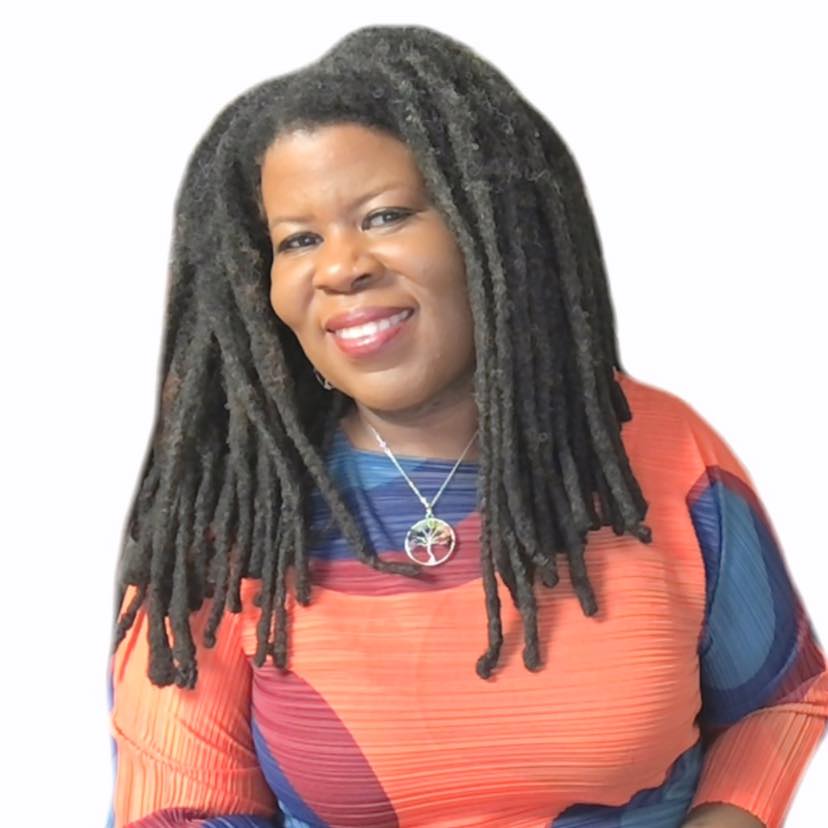
The Rev. Dr. Cheryl A. Lindsay, Minister for Worship and Theology (lindsayc@ucc.org), also serves a local church pastor, public theologian, and worship scholar-practitioner with a particular interest in the proclamation of the word in gathered communities. You’re invited to share your reflections on this text in the comments on our Facebook page: https://www.facebook.com/SermonSeeds.
A Bible study version of this reflection is at Weekly Seeds.