Sermon Seeds: Whose Head
Sunday, October 18, 2026
Twenty-First Sunday after Pentecost| Year A
(Liturgical Color: Green)
Lectionary Citations
Exodus 33:12-23 and Psalm 99 •Isaiah 45:1-7 and Psalm 96:1-9, (10-13) •1 Thessalonians 1:1-10 •Matthew 22:15-22
https://lectionary.library.vanderbilt.edu/texts/?z=p&d=80&y=17134
Focus Scripture: Matthew 22:15-22
Focus Theme: Whose Head
Series: Faithful and Vital (Click here for the series overview.)
Reflection
By Cheryl A. Lindsay
The line separating church and state is short. In part, the idea that intentional boundaries between these institutions serve the greater good is a relatively recent concept. For much of human history, the leader of one was also the leader of the other. Even in Christian history, we may remember that the Anglican Church has its roots in the Church of England. While the leadership of the king or queen of England over that church today is largely as a figurehead, its origin story tells a different tale. The kings of the Hebrew Scriptures served not only as political figures leading a nation, they also were religious leaders. Control over both the exercise of government and of faith coalesces immeasurable power in singular individuals who may be equipped to lead in only one arena…or neither.
The prophets of the Old Testament directed their utterings largely to those in power, speaking God’s truth to those in the position to lead God’s people. In the increasingly contentious dialogue between Jesus and the religious leaders who challenged him, Jesus has a word to share about navigating allegiances to the Holy One and to the empire.
Notably, this discussion continues a contentious encounter between Jesus and those religious leaders who felt threatened by his ministry, movement, and following. They have heard his rebuke of their leadership, motivation, and character in the series of parables he has just shared.
What follows is a kind of cross-examination. Jesus is tag-teamed with questions; first questions from the Pharisees and then from the Sadducees and then from the Pharisees again. The disciples of the Pharisees are up first. It is worth noting that the Pharisees do not come to Jesus themselves; instead they send their disciples (22:15). In doing so, “they avoid direct encounter; the indirect approach heightens the subterfuge.” The disciples of the Pharisees have brought the Herodians with them. It is an unlikely coalition since the Herodians were clear supporters of Rome, serving at Rome’s behest and furthering Roman interests. The Pharisees were of mixed mind on the matter of the Roman occupation. Some Pharisees advocated armed revolt (Shammai School). Others advocated a live and let live policy (Hillel School). Here they are together, nevertheless, and asking a dangerous question about whether it is “lawful to pay taxes to the emperor” (v. 17). They sugar coat the question with flattery: “Teacher, we know that you are sincere, and teach the way of God in accordance with the truth and show deference to no one; for you do not regard people with partiality … ” There is an irony in what they have said because they have spoken truthfully concerning Jesus—“more truthfully than they know” —even in their attempt to entrap him. If they mean to disguise their intent through a flattering preface, they are unsuccessful. Jesus is not fooled by the flattery; he is “aware of their malice” (v. 18) and confronts them rather pointedly. “Why are you putting me to the test you hypocrites? (v. 18). The intent of the question is all too clear. If Jesus says “no” to paying the tax it will be “a dangerous repudiation of Roman authority.” By bringing the Herodians along with them, the Pharisees have raised the threat level (22:16).
Anna Case Winters
Jesus deftly circumvents the threats by refusing to object to the legality of taxes. He reframes the discussion and begins an interrogation of his own. While the religious leaders attempted to entrap him by questioning his loyalty to the empire, Jesus shifted the focus on their loyalty to the Holy One. He begins by challenging them on testing him. In doing so, he is not revealing his divinity; rather, he questions their motives. He confronts their intentions and openly rebukes their statement that they acknowledge Jesus’ sincerity. Clearly, their praise of him is cloaked with ill intent, and Jesus plainly challenges their insincerity with boldness and truth. Then he asks the foundational question, whose head is on the coin issued by the empire.
This question is not a trick or a way of getting around the religious leaders’ question about the legitimacy and obligation to pay taxes. In his response, Jesus recognizes dual obligations. But obligation is not the same as loyalty. One may fulfill their obligations to the state while maintaining their allegiance to the realm and reign of the Holy One.
In fact, the engraved image on the coin provides a central function that counters the kindom of God. Objecting to returning a portion of that currency to the empire is not only unnecessary but may the benefit of reminding the people their provision did not come from Rome but from the Maker of heaven and earth. Interestingly, the religious leaders do not question the corrupt system of taxation executed during that time. They do not question the morality of a system that utilized intimidation and even violence to extract exorbitant taxes far beyond what individuals rightfully owed. Their attempt to reduce communal oppression into a personal choice of piety reduces the realm of God and the mission of restoration and redemption of human brokenness and suffering.
The Latin inscription that it likely bore at that time was “Tiberius, August son of the Divine High Priest Augustus.” The coins functioned as “portable billboards, instruments of propaganda which reminded users of the emperor’s political power and Rome’s status as the favored of the gods” It was also a symbol of defeat and humiliation for subjugated peoples…. When the people answer that it is the emperor’s image on the coin, Jesus says, “Give therefore to the emperor the things that are the emperor’s and to God the things that are God’s.” The answer is a skillful delimitation of the meaning of Roman taxation. To pay the tax is merely to give Caesar back his own. What is due to God is far more than this; wholehearted devotion and service belong to God (not to Caesar). With this aphorism Jesus “deftly permits the paying of taxes, even to a foreign power whose rule over Israel was illegitimate, while at the same time asserting the sovereignty of God.” It is a two-part answer where the second half trumps the first half. As in the earlier discussion around taxes (17:24–27), Jesus’ followers may be paying taxes to the Roman authorities but they are not paying tribute. This is yet another instance of Jesus finding a “third way” that is neither the violence of revolt nor complicity of submission. It amounts to a nonviolent subversion of the oppressive power that does not concede Rome’s sovereignty; only God is sovereign.
Anna Case Winters
Humanity has no images of Jesus, only artistic renderings that may or may not bear only resemblance to the physical attributes of Christ. Yet, the Holy One declares that humanity has been made in the image of the divine. Therefore, when we consider what Jesus looked like, Christians need not craft an image. Rather, we should consider one another as well as all human siblings. We might see Jesus in the face of a Haitian asylum seeker or migrant worker from Venezuela. We might hear Jesus in the voice of the devastated student whose visa has been revoked or the transgender student wondering about the disproportionate and unseemly preoccupation with their bodies and the lies manufactured about their lived experience. We might seek encounters with those who differ with us, not to challenge their identity, culture, or beliefs, but to gain understanding and appreciation for Creator’s gift of diversity.
Let Caesar have his coins. Jesus is the head of the church.
Reflection from Voices of People of African Descent
The 33rd General Synod adopted a Resolution to Recognize the United Nations International Decade for People of African Descent (2015-2024). As part of its implementation, Sermon and Weekly Seeds offers Reflection from Voices of People of African Descent related to the season or overall theme for additional consideration in sermon preparation and for individual and congregational study.
Excerpt from “My America” by Langston Hughes
This is my land, America. Naturally, I love it—it is home—and I am vitally concerned about its mores, its democracy, and its well-being. I try now to look at it with clear, unprejudiced eyes. My ancestry goes back at least four generations on American soil and, through Indian blood, many centuries more. My background and training is purely American—the schools of Kansas, Ohio, and the East. I am old stock as opposed to recent immigrant blood.
Yet many Americans who cannot speak English—so recent is their arrival on our shores—may travel about our country at will securing food, hotel, and rail accommodations wherever they wish to purchase them. I may not. These Americans, once naturalized, may vote in Mississippi or Texas, if they live there. I may not. They may work at whatever job their skills command. But I may not. They may purchase tickets for concerts, theatres, lectures wherever they are sold throughout the United States. Often I may not. They may repeat the Oath of Allegiance with its ringing phrase of “Liberty and justice for all,” with a deep faith in its truth—as compared with the limitations and oppressions they have experienced in the Old World. I repeat the oath, too, but I know that the phrase about “liberty and justice” does not fully apply to me. I am an American—but I am a colored American.
I know that all these things I mention are not all true for all localities all over America. Jim Crowism varies in degree from North to South, from the mixed schools and free franchise of Michigan to the tumbledown colored schools and open terror at the polls of Georgia and Mississippi. All over America, however, against the Negro there has been an economic color line of such severity that since the Civil War we have been kept most effectively, as a racial group, in the lowest economic brackets. Statistics are not needed to prove this. Simply look around you on the Main Street of any American town or city….
Yet America is a land where, in spite of its defects, I can write this article. Here the voice of democracy is still heard—Wallace, Willkie, Agar, Pearl Buck, Paul Robeson, Lillian Smith. America is a land where the poll tax still holds in the South—but opposition to the poll tax grows daily. America is a land where lynchers are not yet caught—but Bundists are put in jail, and majority opinion condemns the Klan. America is a land where the best of all democracies has been achieved for some people—but in Georgia, Roland Hayes, world-famous singer, is beaten for being colored and nobody is jailed—nor can Mr. Hayes vote in the State where he was born. Yet America is a country where Roland Hayes can come from a log cabin to wealth and fame—in spite of the segment that still wishes to maltreat him physically and spiritually, famous though he is.
Read the entire essay: https://churchlifejournal.nd.edu/articles/langston-hughes-my-america/
For Further Reflection
“People often see themselves in terms of whichever one of their allegiances is most under attack.
And sometimes, when a person doesn’t have the strength to defend that allegiance, he hides it. Then it remains buried deep down in the dark, awaiting its revenge. But whether he accepts or conceals it, proclaims it discreetly or flaunts it, it is with that allegiance that the person concerned identifies. And then, whether it relates to colour, religion, language or class, it invades the person’s whole identity. Other people who share the same allegiance sympathise; they all gather together, join forces, encourage one another, challenge “”the other side,”” For them, “”asserting their identity”” inevitably becomes an act of liberation.” ― Amin Maalouf
My whole life has been lived in-between — in between languages, in between cultures, in between countries … My life resisted the kind of easy categories that the head of state had outlined for everyone. Surely, I told myself, a nation was a community, with views that are by necessity different, often divergent, and occasionally contradictory. Surely, true allegiance meant speaking up when something wasn’t right.” ― Laila Lalami
“My loyalties will not be bound by national borders, or confined in time by one nation’s history, or limited in the spiritual dimension by one language and culture. I pledge my allegiance to the damned human race, and my everlasting love to the green hills of Earth, and my intimations of glory to the singing stars, to the very end of space and time.” ― Edward Abbey
Works Cited
Case Winters, Anna. Matthew (Belief: A Theological Commentary on the Bible). Louisville: Westminster John Knox Press, 2015.
Suggested Congregational Response to the Reflection
For the season after Pentecost, the themes are derived from the categories of the Marks for Faithful and Vital Churches. Each subseries will invite engagement with one Mark within the category. Each local church should choose how this will be incorporated. (This could be a sermon talk-back from the lens of the Mark, a direct discussion on the Mark, a prayer or song that relates to the Mark.) The response may also be a call to action embedded in the sermon or the sending inviting engagement beyond worship.
Mark for Congregational Response: Dismantling physical and cultural barriers that hinder accessibility or inhibit connection or relationship with the Local Church and community.
Worship Ways Liturgical Resources
https://www.ucc.org/worship-way/after-pentecost-21a-october-18/
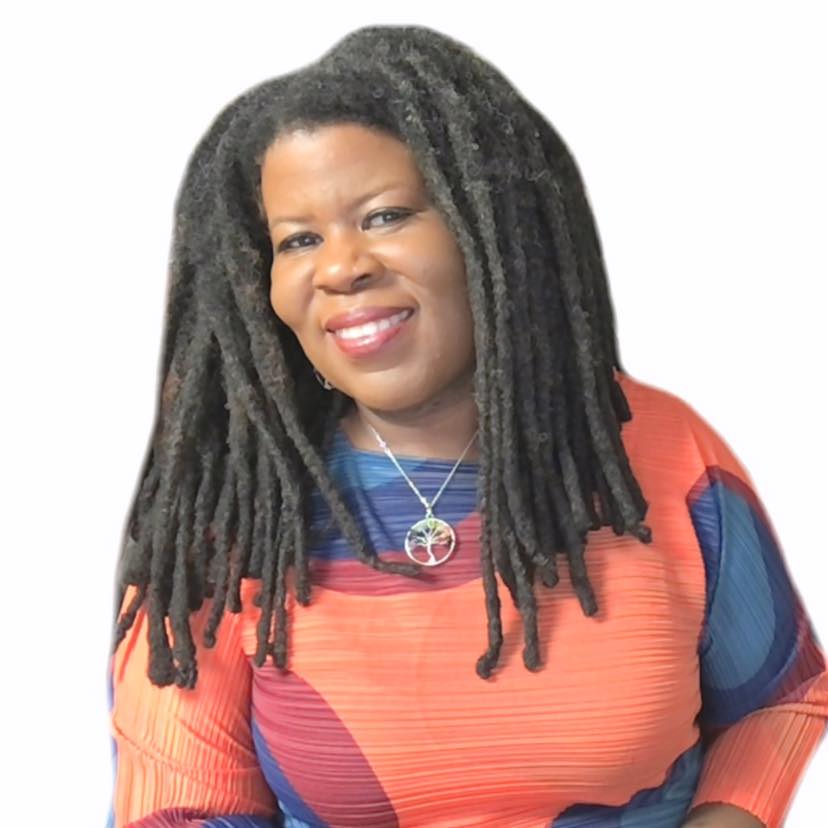
The Rev. Dr. Cheryl A. Lindsay, Minister for Worship and Theology (lindsayc@ucc.org), also serves a local church pastor, public theologian, and worship scholar-practitioner with a particular interest in the proclamation of the word in gathered communities. You’re invited to share your reflections on this text in the comments on our Facebook page: https://www.facebook.com/SermonSeeds.
A Bible study version of this reflection is at Weekly Seeds.