Sermon Seeds: Beyond the Wilderness
Sunday, August 30, 2026
Fourteenth Sunday after Pentecost| Year A
(Liturgical Color: Green)
Lectionary Citations
Exodus 3:1-15 and Psalm 105:1-6, 23-26, 45b • Jeremiah 15:15-21 and Psalm 26:1-8 • Romans 12:9-21 •
Matthew 16:21-28
https://lectionary.library.vanderbilt.edu/texts/?z=p&d=71&y=17134#
Focus Scripture: Exodus 3:1-15
Focus Theme: Beyond the Wilderness
Series: Faithful and Vital (Click here for the series overview.)
Reflection
By Cheryl A. Lindsay
Human beings have an interesting relationship with the wilderness. On the one hand, many crave the so-called “peace and quiet” of nature. Of course, nature is only quiet when compared to the noise of everyday living that many want to escape. Insects and animals communicate and move, which causes the “quiet” sound of nature. Further, nature serves as the location of violence as predators hunt prey, trees or their limbs fall, and weather runs unabated without shelter. In this, the perceived peace only arises following human intervention that limits natural activity and confines the wilderness into parks and other curated spaces. Those controlling efforts too often have the effect of destroying the thing they attempt to preserve.
The creation narratives remind us that what humans had identified as wild actually contains order created out of chaos. Given the role of caretakers, humans justified overreach, excessive use, and exploitation of creation. Those parts of the earth not explicitly controlled by human ambition became the wilderness not because those areas were outside of God’s will but because they were beyond human purposes. But, what if the wilderness is not a dangerous place full of peril but a launching point to enter the realm of God at its purest form?
The Exodus narrative begins with the origin story of Moses as a person and as a leader of a people who will dominate the Hebrew Scriptures, especially the Pentateuch or first five books of the Bible. As a leader, he will serve in several capacities, including prophet and priest. As prophet, Moses speaks truth to those in power, beginning with his adopted family—the household of Pharaoh. As priest, he will intercede on behalf of the people entrusted to his care—the Israelites. As a person, he bridges these two communities. He was raised as Pharaoh’s grandson and enjoyed the privileges of that life while also remaining connected to the heritage of his birth family. His story testifies that the roles of prophet and priest are not as distant as a binary point of view might suggest.
The focus scripture is the third in a series of divine encounters that Moses has that define his call to ministry. It also foreshadows the escalating conflict between the two identities that Moses holds.
God reveals the divine name YHWH to Moses (Exod. 3:6; 6:2). God acknowledges a special relationship with Moses as the God of his father (Exod. 3:6), who created a covenant with his ancestors (Exod. 6:4). God promises to be with Moses in a unique and intimate way (Exod. 3:12; 7:1), and clarifies that the commission of Moses as liberator is because YHWH also has a special relationship with Israel (Exod. 3:7–8; 6:5–8). The special revelation separates Moses from Pharaoh as God’s chosen messenger (Exod. 3:9; 7:1) and the Israelite people from the Egyptians and all other nations (Exod. 3:8; 6:7–8). The two commissions provide the foundation for the development of Israelite religion in the wilderness. The central themes emphasize the character of YHWH as a compassionate liberator of the Israelites, sharing in the experience of suffering and seeking their welfare by protecting from oppression, rescuing from slavery, and giving them land.
Thomas B. Dozeman
The Holy One notices suffering and chooses the side of the oppressed. The chosenness of the people conveyed more about God’s character than theirs as will be illustrated throughout the Exodus story. Delivering them from the Pharaoh’s evil reach proved to be relatively easy. Delivering the people from the impact of that trauma will become generational work. But, it begins here, with a reminder and affirmation that this is the God who made the covenant with their ancestors, and that covenant remains in effect.
Just as the covenant rested on divine initiative, the liberation of the people commenced with divine invitation requiring human acceptance.
The emphasis throughout is on the divine initiative. It is God who confronts Moses and calls him to a task. Moses does not prepare for the encounter, nor does he seek it. He is surprised by what happens. Yet it is nowhere suggested that this is a “radical break with the past” for Moses (contra Childs, p. 73). In view of chapter 2, God picks a known entity, a person with gifts who is not afraid to enter into the kind of activity that God has in mind. The giftedness that Moses brings to this moment is not negated. To the contrary, God’s creative work in Moses’ life to this point has shaped a human being with endowments suited for the tasks ahead. While the specific encounter with God brings new insights and a changed direction for life, an informed creation theology will affirm many continuities with Moses’ past.
Terence E. Fretheim
As a person, Moses had shortcomings that made him hesitate to embrace God’s assignment for his life. Yet, the Holy One did not consider them to be disqualifiers. Rather, they offered an opportunity for reliance upon the Holy One’s guidance as well as a shared leadership model that developed to address those limitations and brought additional gifts. Human insufficiency secured the need and acceptance of partnership.
Moses’ struggle is real, revealing both a lack of personal ambition and a capacity for leadership; Moses can be bold and perseverant in the face of powers beyond his own. God’s responses reveal one who takes Moses’ concerns with utmost seriousness and with uncommon patience. God does not understand that Moses is a slave to the divine will; God does not demand a self-effacing Moses. Greenberg (p. 94) says it well: “Those who are brought close to God retain their integrity even in moments of closest contact. They are not merely passive recipients, but active, even opposing respondents. There is true address and response, genuine give and take. The human partner has a say in shaping the direction and outcome of events.” (See at 3:1–7:7.)….God acts in and through the work of Moses (as well as the natural order). The activity of both is crucial for what is to happen. God takes the initiative, invites Moses to be sent before Pharaoh, and sets the agenda, but God needs Moses as an instrument in and through whom to work (as generally in the Old Testament).
Terence E. Fretheim
The work that Moses will do will require more than simply moving his flock from beyond the wilderness. He will have to seek an audience with Pharaoh, not as an heir, but as an adversary committed to the liberating work of the Holy One in favor of the oppressed. In the encounter described, God emphasizes the significance of his commissioning by instructing Moses to remove his shoes while on holy ground.
This ground is now holy because of God’s appearance, not because it was already holy. There is no holiness inherent in the place as such, no natural sanctity, but that which is not holy now becomes so by virtue of the divine purpose for the place (not just the divine presence). That which is an ordinary part of the natural order is sanctified, set apart for special use by God. This setting apart was not only for this occasion but also for the future. God’s appearance to Moses establishes Sinai/Horeb as a sacred place (cf. 3:12; Gen. 28:16–17). God draws a particular plot of ground, an aspect of the creative order, into a new sphere of relationship; nature too is affected by and serves as an instrument for the divine presence and purpose. Because of this change in the character of the place, Moses is asked to follow the custom of removing shoes to show respect (cf. Josh. 5:13–15).
Terence E. Fretheim
In the creation narratives, at each stage of newly created order, God declared the product of the work to be good. Here, as the Holy One commissions Moses, he declares that place to be holy. In other words, going beyond the wilderness takes us to a journey of divine-human partnership, co-creating, and communion. That is the birth of liberation and the source of sanctified leadership—beyond the wilderness.
Reflection from Voices of People of African Descent
The 33rd General Synod adopted a Resolution to Recognize the United Nations International Decade for People of African Descent (2015-2024). As part of its implementation, Sermon and Weekly Seeds offers Reflection from Voices of People of African Descent related to the season or overall theme for additional consideration in sermon preparation and for individual and congregational study.
“There are days when the sun is too bright, when the majestic feels like the kind of beautiful you cannot approach. Look to your left. The beauty you seek can be found in the mundane. A man holding a boy holding a worn nylon octopus, and maybe you’re grinning too. In a time when we have more access than ever before to the traumas of this world, how will you resist the tide of despair? Let beauty be your anchor. If you find the lake view too bright, bring your gaze closer, perhaps all the way to your own flesh and blood. Life is monstrous on the threshold of apocalypse. The practice of beholding, this fidelity to beauty in all things, I’ve come to believe, is no small form of salvation.”
Cole Arthur Riley, Black Liturgies: Prayers, Poems, and Meditations for Staying Human
For Further Reflection
“It had nothing to do with gear or footwear or the backpacking fads or philosophies of any particular era or even with getting from point A to point B.
It had to do with how it felt to be in the wild. With what it was like to walk for miles with no reason other than to witness the accumulation of trees and meadows, mountains and deserts, streams and rocks, rivers and grasses, sunrises and sunsets. The experience was powerful and fundamental. It seemed to me that it had always felt like this to be a human in the wild, and as long as the wild existed it would always feel this way.” ― Cheryl Strayed, Wild: From Lost to Found on the Pacific Crest Trail
“The Wilderness holds answers to more questions than we have yet learned to ask.” ― Nancy Newhall
“We had no choice. Sadness was a dangerous as panthers and bears. the wilderness needs your whole attention.” ― Laura Ingalls Wilder
Works Cited
Dozeman, Thomas D. Gale A. Yee, Ed. Fortress Commentary on the Bible: Two Volume Set. Minneapolis: Fortress Press, 2014.
Fretheim, Terence E. Exodus: Interpretation: A Biblical Commentary for Teaching and Preaching. Louisville: Westminster John Knox Press, 2010.
Suggested Congregational Response to the Reflection
For the season after Pentecost, the themes are derived from the categories of the Marks for Faithful and Vital Churches. Each subseries will invite engagement with one Mark within the category. Each local church should choose how this will be incorporated. (This could be a sermon talk-back from the lens of the Mark, a direct discussion on the Mark, a prayer or song that relates to the Mark.) The response may also be a call to action embedded in the sermon or the sending inviting engagement beyond worship.
Mark for Congregational Response: Nurturing gifts for ministry among lay people and equipping new generations of faith leaders.
Worship Ways Liturgical Resources
https://www.ucc.org/worship-way/after-pentecost-14a-august-30/
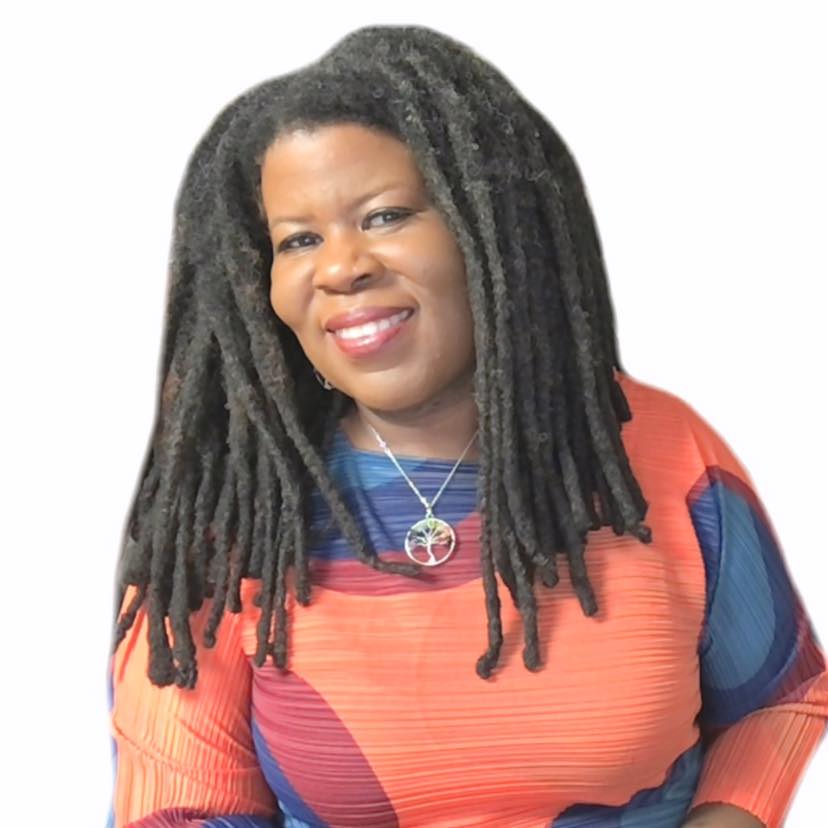
The Rev. Dr. Cheryl A. Lindsay, Minister for Worship and Theology (lindsayc@ucc.org), also serves a local church pastor, public theologian, and worship scholar-practitioner with a particular interest in the proclamation of the word in gathered communities. You’re invited to share your reflections on this text in the comments on our Facebook page: https://www.facebook.com/SermonSeeds.
A Bible study version of this reflection is at Weekly Seeds.