Sermon Seeds: Will Not Come to Poverty
Sunday, August 16, 2026
Twelfth Sunday after Pentecost| Year A
(Liturgical Color: Green)
Lectionary Citations
Genesis 45:1-15 and Psalm 133 • Isaiah 56:1, 6-8 and Psalm 67 • Romans 11:1-2a, 29-32 • Matthew 15: (10-20), 21-28
https://lectionary.library.vanderbilt.edu/texts/?z=p&d=69&y=17134
Focus Scripture: Genesis 37:1-4, 12-28
Focus Theme: Lived as an Alien
Series: Faithful and Vital (Click here for the series overview.)
Reflection
By Cheryl A. Lindsay
Famine is real. Drought is real. The two connect in causational ways. Drought arises from ecological conditions in which there is extreme dryness. Deserts experience perpetual dryness, but even lands that are routinely nourished by rain and waterways may experience times of drought conditions. When those circumstances continue over sustained seasons, famine may result naturally. Unfortunately, causes of famine extend beyond geological and ecological conditions and may generate due to human intervention and interaction.
Geo-political factors can lead to famine through hoarding of resources, restricted supply chains due to war and other conflicts, and economic policy decisions that restrict the equitable distribution of resources. Any of these conditions along with drought caused by nature may lead to famine, and famine leads to death. Poverty, as a human condition, does not require drought or famine because poverty may, and does, exist even when resources are abundant. People experience poverty when their access to resources has been eliminated or severely limited even when the resources themselves are plentiful.
This is not God’s plan. The design of creation exemplifies abundance. In the kindom of God, all needs are met through rhythms and systems of provision. Human disruption of God’s plan creates poverty. The Joseph story recounted in Genesis illustrates how God provides even when natural conditions could lead to famine.
The intervention takes place years before the problem emerges.
Meanwhile Joseph is sold into slavery, where by fits and starts he rises to power as second-in-command to Pharaoh, the king of Egypt. Taken from home as a teenager, Joseph is thirty when he is put in charge of a huge famine relief program. In the interim he has been falsely accused of attempted rape, imprisoned on that charge, and confined for some time. It is a gift from God, the ability to interpret dreams, that accounts for his rise to power. In prison Joseph’s gift is made known first to his fellow prisoners, then eventually to Pharaoh. Not only does he predict a great famine in the land, he shrewdly devises steps to protect the population and nullify its effects. The narrator makes it clear that “the LORD was with him, and whatever he did, the LORD made it prosper” (39:23). Through adversity the spoiled teenager grows into a wise, successful, and highly moral man. When framed by Potiphar’s wife, he asks, “How could I do this great wickedness, and sin against God?” (39:9)
Celia Brewer Marshall
The leader of the nation, Pharaoh, received the vision from a God he did not worship and had to rely upon someone his government had imprisoned in order to interpret the dream. This is not a personal message impacting just the leader; this dream has consequences for the entire region. Not only does acting on this interpretation require a multi-year strategy, it hinges on trusting a man accused by the spouse of a high-ranking official. Pharaoh has to exert political will in order to lead well and avoid a devastating famine caused by drought.
Famine is real, but the condition arises not only due to natural conditions, but by choices made by those with the power to mitigate and even prevent it. Pharaoh could not change the drought conditions, but he could authorize an agricultural and economic system to leverage their resources and store resources so that the drought would not lead the people to poverty. During the era of excessive prosperity, without the foresight of the dream, Pharoah may have been tempted to hoard the abundance for a privileged few, to waste the excess, or to use it recklessly. Instead, the Holy One gave Pharaoh a warning, which Joseph conveyed, and the leader listened.
As a result, Joseph, who had been thrown in a ditch, was elevated to the highest level of leadership to implement the plan that would save not only the Egyptians but also other nation states in the region. During the years of drought, other nations could have been plunged into poverty, but God’s provision is a lesson in generosity. There was more than enough to share; the blessing was not only for the Egyptian people; it was for their neighbors as well. No one becomes poor by sharing the gifts of God. In fact, the Joseph narrative strongly suggests that generosity leads to wealth and prosperity, materially as well as spiritually.
The narrative now hinges on the conviction that God is free. He is at work for his purpose in spite of, through, and against every human effort. Such a reading collides with any easy humanism. It also collides with a kind of supernaturalism which wants to distinguish between God’s work and human work. Against such humanism which separates God’s work and ours, this narrative affirms that the arena of human choice is precisely where God’s saving work is done.
Walter Brueggemann
At this point, the Joseph narrative has come full circle. It started with the dream of the older siblings having to come to their younger brother for survival. That dream manifested in this section of Genesis, but rather than an arrogant, spoiled, and oppressive brother ruling over his demeaned siblings, the text reveals a powerful Joseph overcome with love and joy at being able to reconcile with the brothers who plotted his ruin. While remorse for their ill treatment was justified, their fears that he would exact revenge were unfounded and unnecessary. Eventually, the brothers would retrieve Israel, their father, and their households and return to Egypt and live in harmony and abundance.
This story is not only about a human family, it’s about the possibilities of the kindom reigning in geopolitical relationships. What would happen if the countries of the world today fully committed their abundance to resource nations in drought?
As the world works to achieve the United Nations Sustainable Development Goal 1 (SDG1): End poverty in all its forms everywhere, by 2030, it is critical to understand its strong interrelationship with two other SDGs: End hunger, achieve food security and improved nutrition, and promote sustainable agriculture (SDG2) and Reduce inequality within and among countries (SDG10). Progress in one area depends on efforts in the others, and all three goals are part of the global public health agenda. Famines, which can be understood as “acute episodes of extreme hunger that result in excess mortality due to starvation and hunger-induced diseases” [1, 2], represent one of the most serious consequences of poverty and inequality, but they also contribute to the further immiseration and marginalization of affected populations. Recognizing these interrelationships has helped transform our approach to famine in the past and could provide a starting point for exploring new advances for the future. In his landmark 1981 book, Poverty and Famines: An Essay on Entitlement and Deprivation, future Nobel Laureate Amartya Sen proposed a revolutionary shift in our understanding of these crises. He argued that famines often occur not from a lack of availability of food, but from the inability of certain populations to access it.
Paul W. Howe and Elena N. Naumova
Poverty is real, and it is a human choice. It is not the will of the Holy One. In fact, poverty is antithetical to the promise of God…a promise that followers of the Way are commissioned to keep. The resources to eradicate it exist and are readily accessible to some. The question is do we have the will to ensure that human siblings around the globe will not come to poverty.
Reflection from Voices of People of African Descent
The 33rd General Synod adopted a Resolution to Recognize the United Nations International Decade for People of African Descent (2015-2024). As part of its implementation, Sermon and Weekly Seeds offers Reflection from Voices of People of African Descent related to the season or overall theme for additional consideration in sermon preparation and for individual and congregational study.
Excerpt from “Dr. Bethune’s Last Will & Testament”
By Mary McLeod Bethune
Already I have begun working on my autobiography which will record my life-journey in detail, together with the innumerable side trips which have carried me abroad, into every corner of our country, into homes both lowly and luxurious, and even into the White House to confer with Presidents. I have also deeded my home and its contents to the Mary McLeod Bethune Foundation, organized in March, 1953, for research, interracial activity and the sponsorship of wider educational opportunities.
Sometimes I ask myself if I have any other legacy to leave. Truly, my worldly possessions are few. Yet, my experiences have been rich. From them, I have distilled principles and policies in which I believe firmly, for they represent the meaning of my life’s work. They are the products of much sweat and sorrow.
Perhaps in them there is something of value. So, as my life draws to a close, I will pass them on to Negroes everywhere in the hope that an old woman’s philosophy may give them inspiration. Here, then is my legacy.
I LEAVE YOU LOVE. Love builds. It is positive and helpful. It is more beneficial than hate. Injuries quickly forgotten quickly pass away. Personally and racially, our enemies must be forgiven. Our aim must be to create a world of fellowship and justice where no man’s skin, color or religion, is held against him. “Love thy neighbor” is a precept which could transform the world if it were universally practiced. It connotes brotherhood and, to me, brotherhood of man is the noblest concept in all human relations. Loving your neighbor means being interracial, interreligious and international….”
Read the full text: https://www.cookman.edu/history/last-will-testament.html
For Further Reflection
“There are people in the world so hungry, that God cannot appear to them except in the form of bread.” ― Mahatma Gandhi
“You might be poor, your shoes might be broken, but your mind is a palace.” ― Frank McCourt, Angela’s Ashes
“Do you think, because I am poor, obscure, plain and little, I am soulless and heartless? You think wrong! – I have as much soul as you, – and full as much heart! And if God had gifted me with some beauty and much wealth, I should have made it as hard for you to leave me, as it is now for me to leave you!” ― Charlotte Brontë, Jane Eyre
Works Cited
Brewer Sinclair, Celia. Genesis (Interpretation Bible Studies). Louisville: Westminster John Knox Press, 1999.
Brueggemann, Walter. Genesis: Interpretation: A Bible Commentary for Teaching and Preaching. Louisville: John Knox Press, 2010.
Howe Paul W. and Elena N. Naumova. “Poverty and famines 2.0: the opportunities and challenges of crisis modeling and forecasting.” National Library of Medicine: https://pmc.ncbi.nlm.nih.gov/articles/PMC9315083/ Accessed August 6, 2026.
Suggested Congregational Response to the Reflection
For the season after Pentecost, the themes are derived from the categories of the Marks for Faithful and Vital Churches. Each subseries will invite engagement with one Mark within the category. Each local church should choose how this will be incorporated. (This could be a sermon talk-back from the lens of the Mark, a direct discussion on the Mark, a prayer or song that relates to the Mark.) The response may also be a call to action embedded in the sermon or the sending inviting engagement beyond worship.
Mark for Congregational Response: Implementing safe conduct and abuse prevention practices and policies to foster a healthy environment for all people, particularly vulnerable individuals.
Worship Ways Liturgical Resources
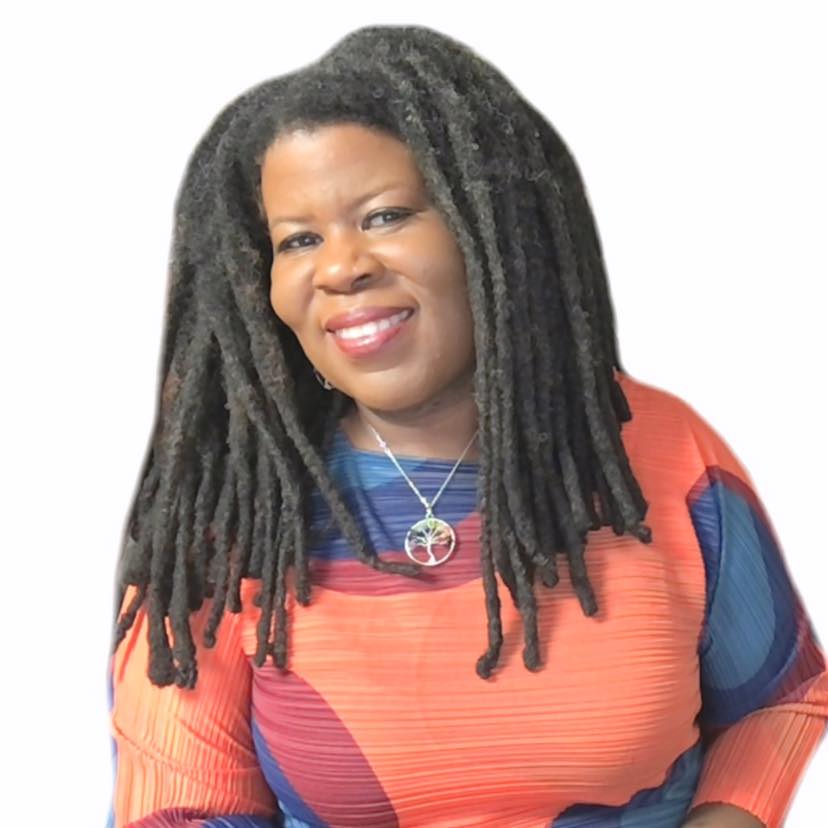
The Rev. Dr. Cheryl A. Lindsay, Minister for Worship and Theology (lindsayc@ucc.org), also serves a local church pastor, public theologian, and worship scholar-practitioner with a particular interest in the proclamation of the word in gathered communities. You’re invited to share your reflections on this text in the comments on our Facebook page: https://www.facebook.com/SermonSeeds.
A Bible study version of this reflection is at Weekly Seeds.