
Voting Rights are a Justice Issue
In the United States the fight for voting rights has been historically framed as a civil right. Civil rights are personal rights guaranteed and protected by the U.S. Constitution and federal laws enacted by Congress, such as the Civil Rights Act of 1964 and the Americans with Disabilities Act of 1990. Civil rights include protection from unlawful discrimination. The need to guarantee and protect the personal rights of individuals is indicative of the lived experience of individuals and groups who rights were denied or decried by majority culture. Indigenous people, African descendant people, women, persons with disabilities, immigrant communities, LGBTQIA+ persons and others have been on the front lines of fighting for and defending their civil rights at various points in the history of the United States.
The movement for Civil Rights has not ended, instead, the fight for Civil Rights continues at a time when laws and practices that protect the rights of all are being contested and rolled back in the interest of a weakened democracy and white Christian nationalism. The protection and guarantee of civil rights which are defined by the United States Constitution and laws such as the Civil Rights Act of 1964. The five core civil rights are: the right to vote, freedom of speech, equal education, fair housing and equal employment. These rights are guaranteed. To deny a person’s civil rights is to violate their rights which are guaranteed by the law. Some civil rights are guaranteed for citizens and non-citizens.
The SAVE America Act will violate the civil rights of millions of Americans who are eligible to vote. The bill is currently stalled in the Senate amidst concerns for protecting the voting rights of the American people. As the SAVE America Act languishes in the Senate, there are heightened concerns for the implications of Executive Order 14399: Ensuring Citizenship Verification and Integrity in Federal Elections. This Executive Order was signed by the President on March 31, 2026, one of 44 orders signed this year. There have been 270 Executive Orders signed by the President since his inauguration on January 25, 2025.
Executive Order 14399 has implications for the voting rights of millions. Unlike the SAVE America Act which requires Congressional action, Executive orders do not require a vote. Executive Orders are not legislation; they require no approval from Congress, and Congress cannot simply overturn them. Congress may pass legislation that might make it difficult, or even impossible, to carry out the order, such as removing funding. Only a sitting U.S. President may overturn an existing executive order by issuing another executive order to that effect.
This Executive Order, like many others, has the potential to redefine access to civil rights, rolls back the rights of millions, and usurps the rights of states in their oversight of federal elections.
The Executive Order directs the Department of Homeland Security, in coordination with the Social Security Administration, to compile and transmit to each State’s chief election official a “State Citizenship List” naming all individuals confirmed to be U.S. citizens who will be over 18 at the time of an upcoming federal election and who maintain residence in the State. The State Citizenship List will be derived from federal citizenship and naturalization records, SSA records, SAVE data, and other relevant federal databases.
Additionally, the EO directs the U.S. Postal Service (USPS) to impose stricter controls on mail-in voting. The United States Postal Service Rulemaking on Mail-In and Absentee Ballots requires that the postal service proposal include enhanced tracking requirements and provisions forbidding transmission of mail-in or absentee ballots from voters not enrolled with USPS for mail-in or absentee ballots. The order calls for limiting mail ballots and using federal date to compile lists of eligible voters – moves experts say exceed the constitutional authority of the President.
Challenges to EO 14399 point to the inaccuracy of the SAVE database, the violation of postal statutes and the privacy act, citing the unconstitutional burden to the right to vote, infringement on separation of powers principles, and a myriad of additional concerns for millions who have the right to vote.
Defending the right to vote is a non-partisan action. The right to vote is not determined by issues, political interests or participation in a particular political party. However, rescinding the right to vote and violating the voting rights of eligible voters continues to be a strategy for culling voters, and influencing elections.
As midterm elections approach, the SAVE Act if passed and EO 14399 if upheld in court will disenfranchise millions by hindering their ability to vote. Guaranteeing voting rights is a justice issue. Upholding the right to vote is a justice issue. Justice places values on the rights of all, not on the rights of some.
Communities of faith continue to call for justice on multiple issues. Here too, voices of faith must be heard in the call to protect the civil rights of voters. Voting is not only a civil right, but also a human right to be protected and guaranteed with dignity and respect.
Content on ucc.org is copyrighted by the National Setting of the United Church of Christ and may be only shared according to the guidelines outlined here.
Related News
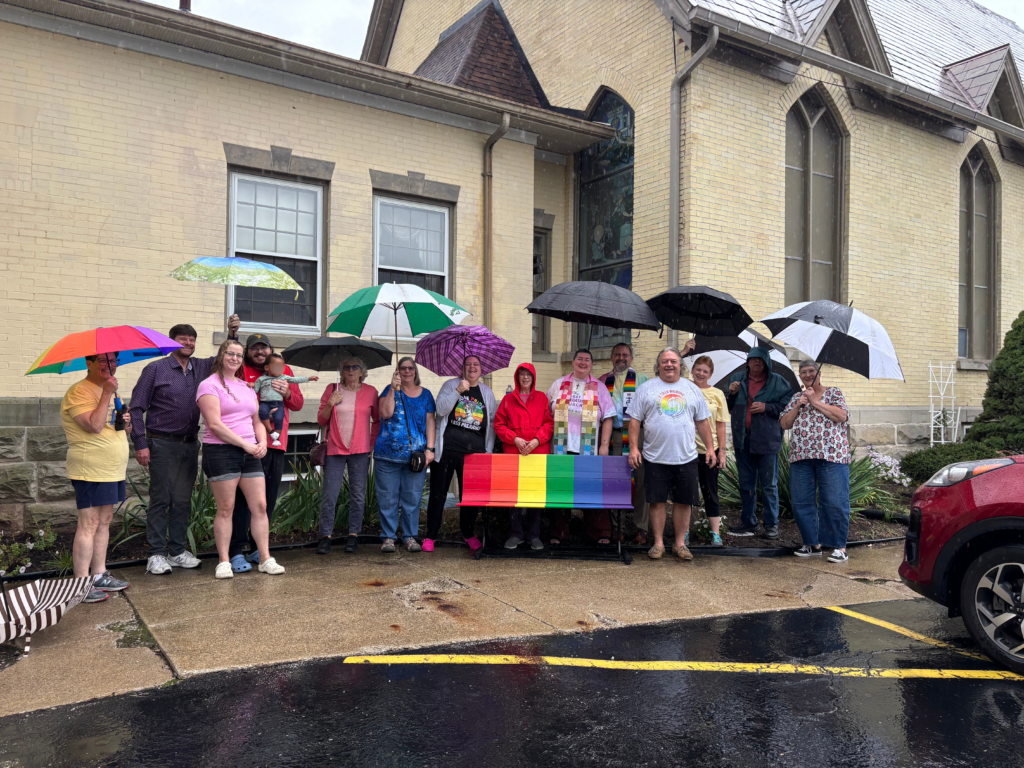
North Ridgeville UCC Church dedicates new rainbow bench, won’t let theft slow them down
In early September, a rainbow colored bench was stolen from the back of the First...
Read More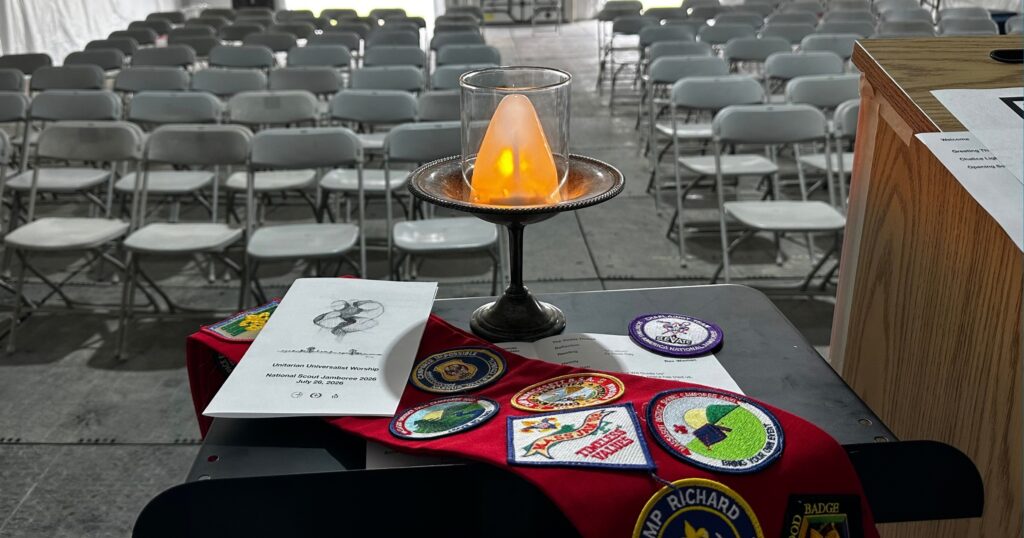
‘A space ripe for interfaith engagement’: Inclusive Christian traditions team up at Scouting America national gathering to offer support, presence, education
The Rev. Aaron Wisman says he was raised as a “none” – someone with no religious...
Read More
How do we respond to AI data centers? UCC study circle seeks input from local activists
The UCC’s Environmental Justice Ministries and Media Justice Ministry have joined together...
Read More